All About The 8 Types of Woodpeckers in Michigan! (ID Guide and Pictures)
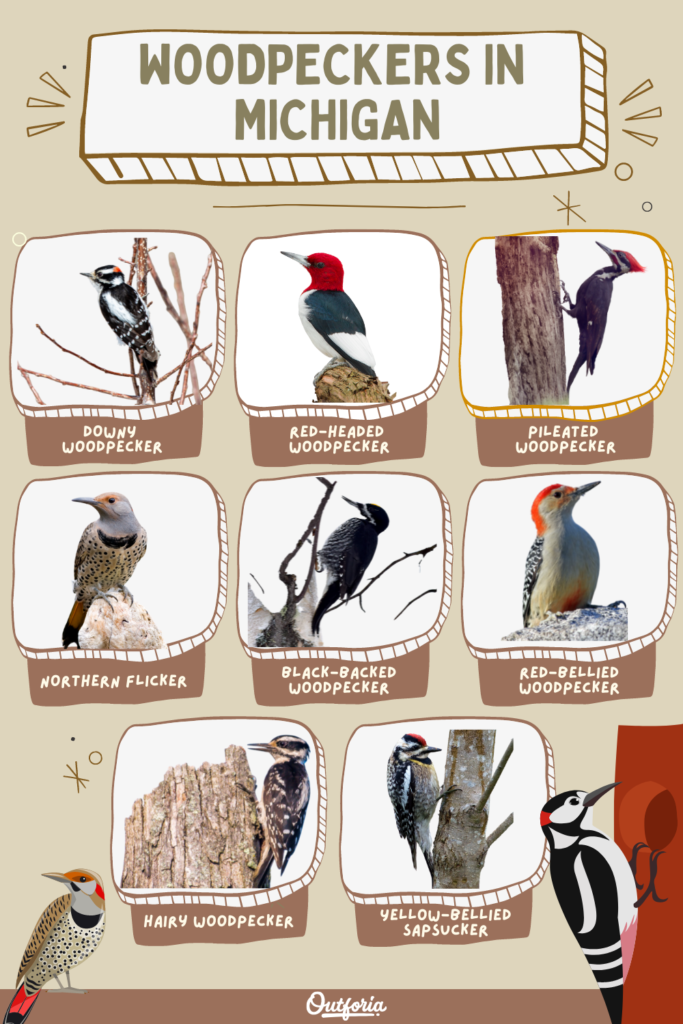
share this image on your site
<a href="https://outforia.com/woodpeckers-in-michigan/"><img style="width:100%;" src="https://pub-c38b6e8bbd4149d184fca684841a3ecd.r2.dev/images/2022/05/woodpeckers-in-michigan-infographics-683x1024.png"></a><br>woodpeckers in michigan <a href="https://outforia.com">Outforia</a>You May Also Like: 40 Wonderful Michigan Birds: ID Guide, Photos, Locations, And More!
The 8 Species of Woodpeckers in Michigan
1. Downy Woodpecker (Picoides pubescens)
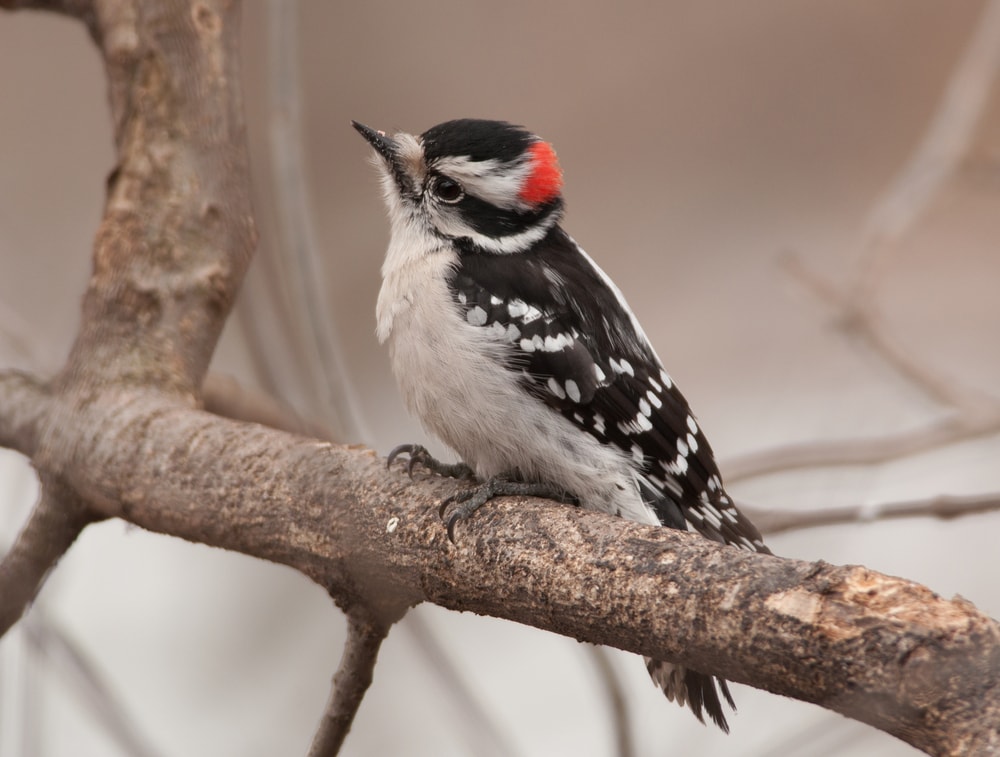
The smallest in North America, the Downy Woodpecker is also a frequent sight over most of the continental United States. In Michigan, it can be found year-round and identified with the characteristic pecking sound of their strong beaks hitting tree trunks in search of insects and other delicacies. They have a high-pitched and rapid call, almost like a whining pip or squeak that lowers in pitch towards the end.
Identifying Features
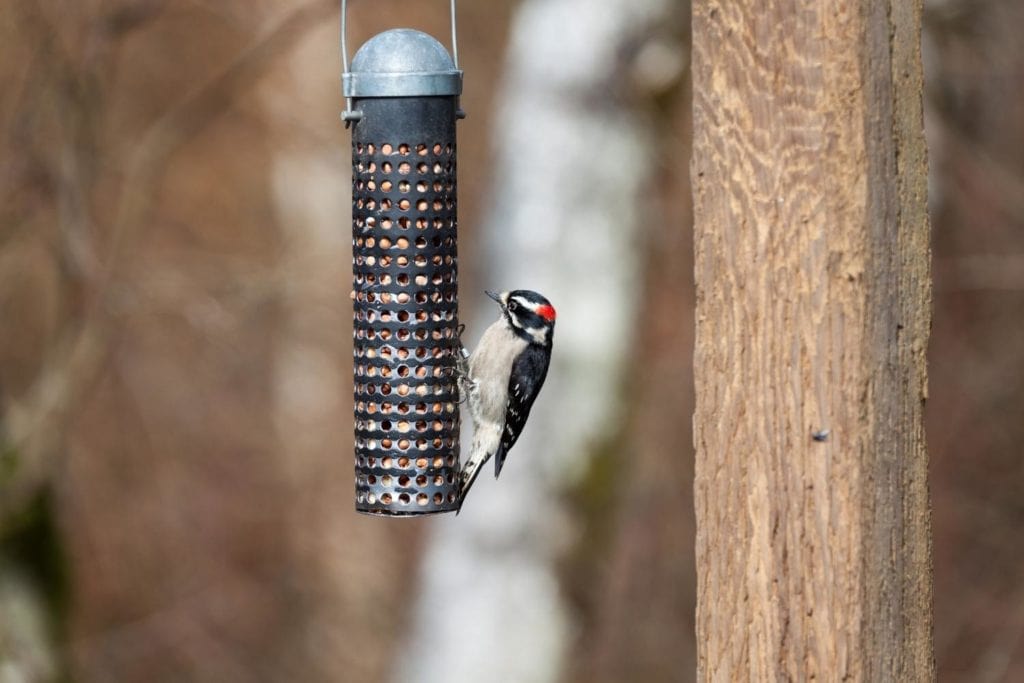
Length: 5.5-6.7 in (14-17 cm)
Weight: 0.7-1.0 oz (21-28 g)
Wingspan: 9.8-11.8 in (25-30 cm)
Downy Woodpeckers are fairly small creatures – bigger than a sparrow but still smaller than a robin. They have the high-contrast coloration of black and white with their wings being almost checkered or horizontally striped. Their heads boast bold vertical stripes and the males typically have a small shock of red feathers on top.
Where to Find Them
Year-Round: All over Michigan
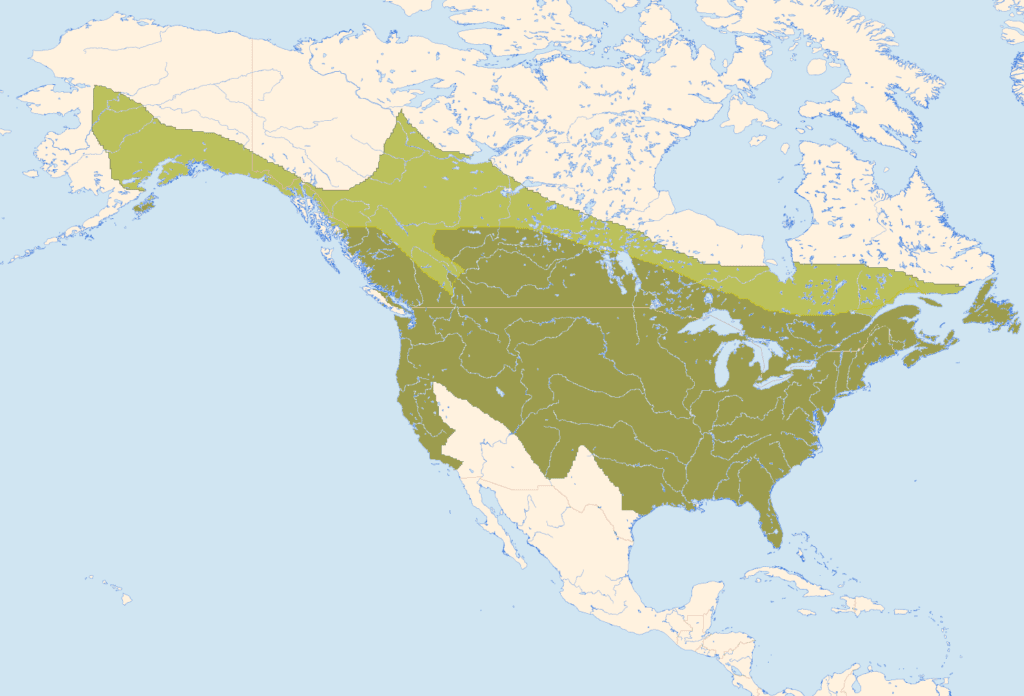
range map of a downy woodpeckerUlrich prokop – Jerome A. Jackson und Henri R. Ouellet: Downy woodpecker. In: The Birds of North America. No. 613, Philadelphia 2002 / CC BY-SA 3.0 / Wikimedia commons
Downy Woodpeckers like places to perch but otherwise aren’t too particular about where they live. They tend to frequent open woodland full of deciduous trees but can just as easily be found in urban areas like city parks or vacant lots. A good backyard bird feeder may just be enough to attract them too!
2. Red-Headed Woodpecker (Melanerpes erythrocephalus)
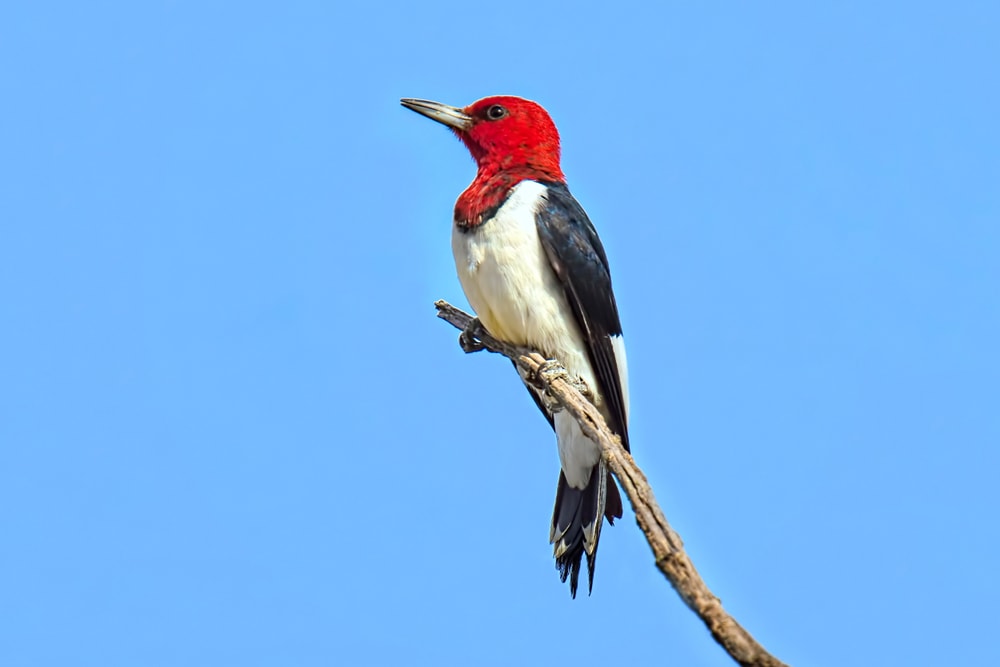
If you head out to find a Red-Headed Woodpecker, keep conservation principles in mind. This really goes for any sort of outdoor pursuit but the Red-Headed Woodpecker’s population has been declining steadily for several years and doesn’t seem to be stopping any time soon which means they need a little extra TLC from all of us humans.
Identifying Features
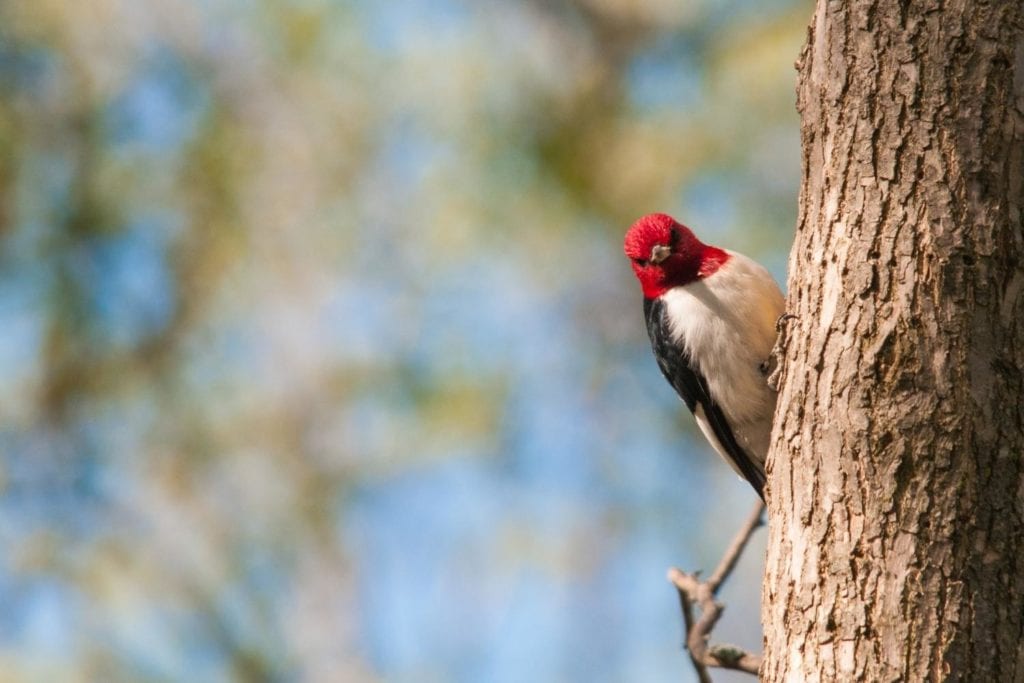
Length: 7.5-9.1 in (19-23 cm)
Weight: 2.0-3.2 oz (56-91 g)
Wingspan: 16.5 in (42 cm)
Duly named for their most striking feature, Red-Headed Woodpeckers boast a bright red head and black beak. They have downy white chests and underwings and black backs with large patches of white, sometimes dividing the wing in half between an upper black back and white wingtips.
Where to Find Them
Breeding Season: South Michigan
Non-Breeding Season: North Breeding Season
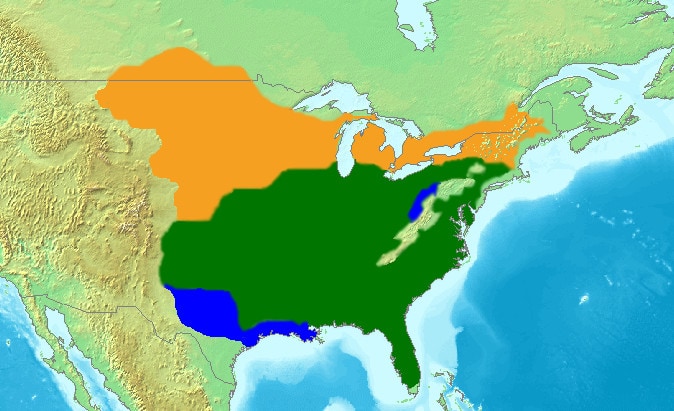
range map of a red-headed woodpeckerScops / CC BY-SA 4.0 / Wikimedia commons
Red-Headed Woodpeckers tend to frequent grassy savanna lands, open woodland, and lowland forests. Think of the Algonac Prairie and Savanna land. You’re very likely to find Red-Headed Woodpeckers here and in regions similar to it.
3. Pileated Woodpecker (Dryocopus pileatus)
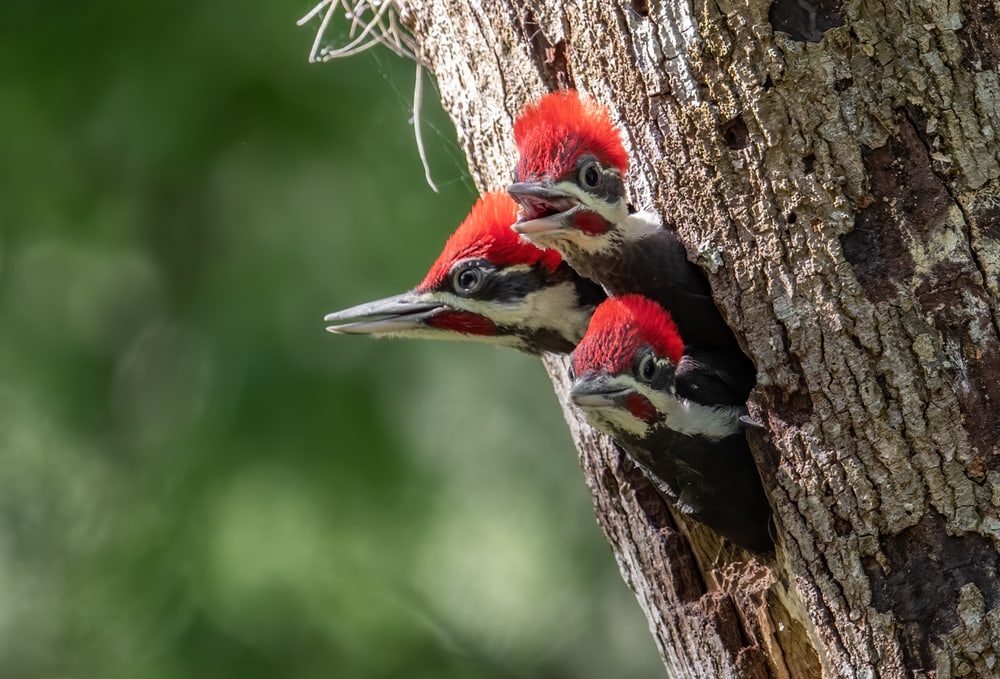
The largest Woodpecker in North America, the Pileated Woodpecker did not fare well with the rise of the logging trade and deforestation in the United States. They have started to see a bit of a comeback in recent years. The Audubon Society theorizes that this may be a result of them adapting to proximity to humans and living in second-growth woods.
Identifying Features
Length: 15.8-19.3 in (40-49 cm)
Weight: 8.8-12.3 oz (250-350 g)
Wingspan: 26.0-29.5 in (66-75 cm)
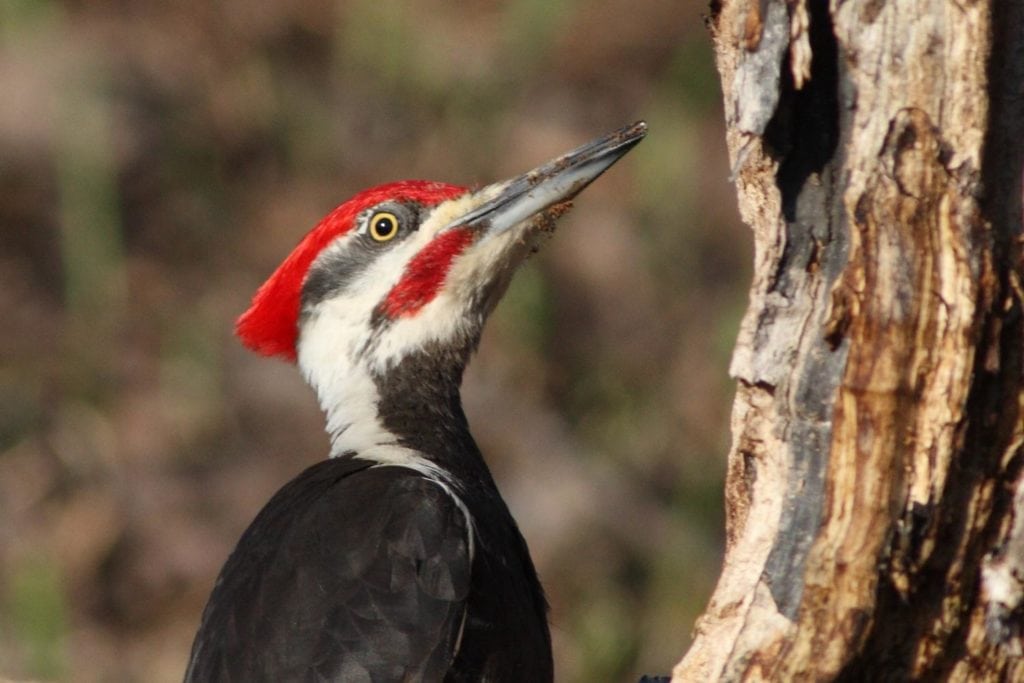
Pileated Woodpeckers are nothing if not noticeable. These mostly black beauties have a shock of red fringe along their heads that is oddly reminiscent of a punk rocker’s mohawk. Males do have an extra stripe of red along their cheeks as well. They also possess the characteristically long beaks known to woodpeckers. Despite their mostly black appearance, you may notice a Pileated Woodpecker in flight due to the white underwings and the occasional flecks of white along their backs.
In case they look familiar, these woodpeckers were the birds that inspired the Woody Woodpecker cartoons.
Where to Find Them
Year-Round: North and South West Michigan
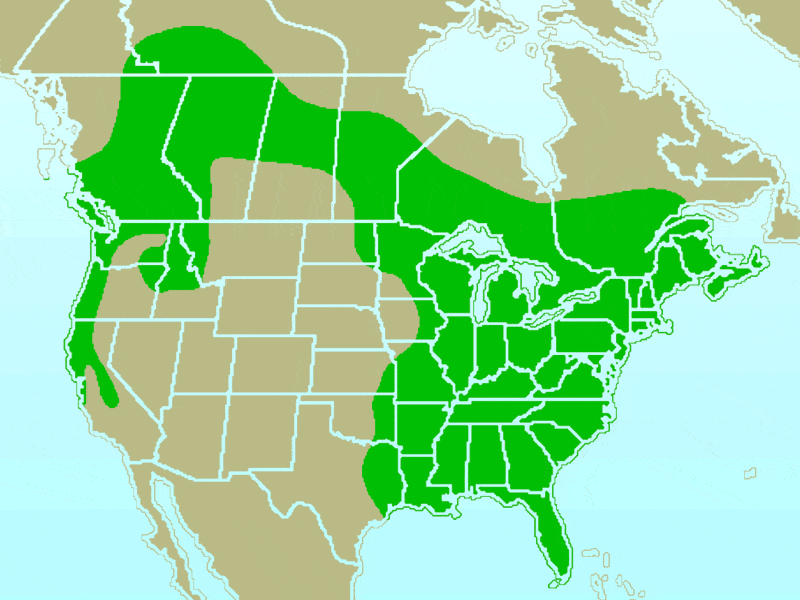
range map of a pileated woodpeckerKen Thomas / Public Domain / Wikimedia commons
If the state of Michigan looks like a mitten, you can find Pileated Woodpeckers pretty much everywhere, year-round, except for the thumb. They tend to like open, wooded areas and while likely preferring old-growth seem to be adapting to second-growth areas.
4. Northern Flicker (Colaptes auratus)
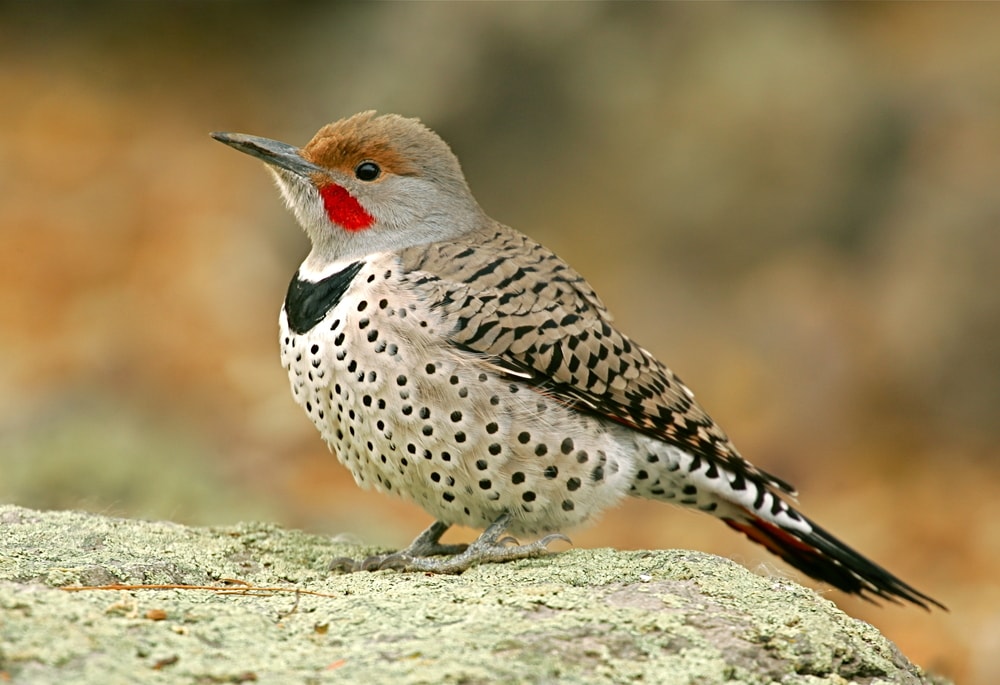
The Northern Flicker has a flair for dramatics. If their brightly coloured but cleverly hidden plumage isn’t enough, their call is both distinct and frequent. It sounds a bit like a long, rolling chirp in staccato. And while all woodpeckers have fairly long tongues, the Northern Flicker has an extra long tongue that can extend up to two inches (4cm) from their beaks.
Identifying Features
Length: 11.0-12.2 in (28-31 cm)
Weight: 3.9-5.6 oz (110-160 g)
Wingspan: 16.5-20.1 in (42-51 cm)
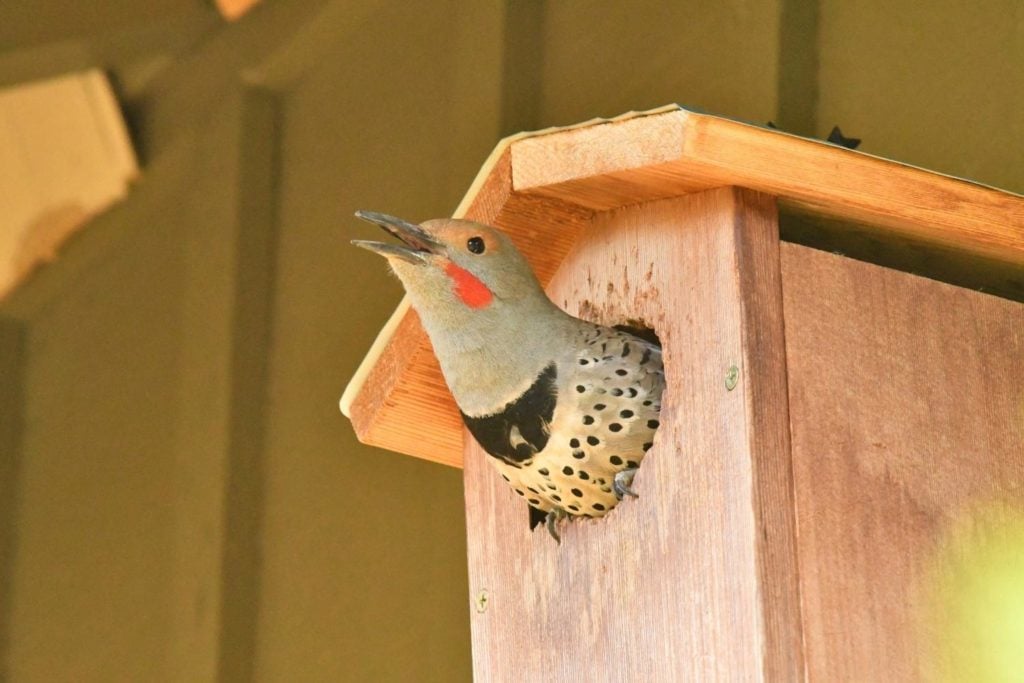
Primarily living in various shades of brown, Northern Flickers in Michigan have bright yellow underwings and tails. They also have a white rump patch that’s particularly noticeable in flight. If your binoculars are strong enough (because you’re doing your best to witness without disturbing these little beings), you’ll notice that their chests and heads are patterned with black spots or stripes as well.
Where to Find Them
Year-Round: All Over Michigan
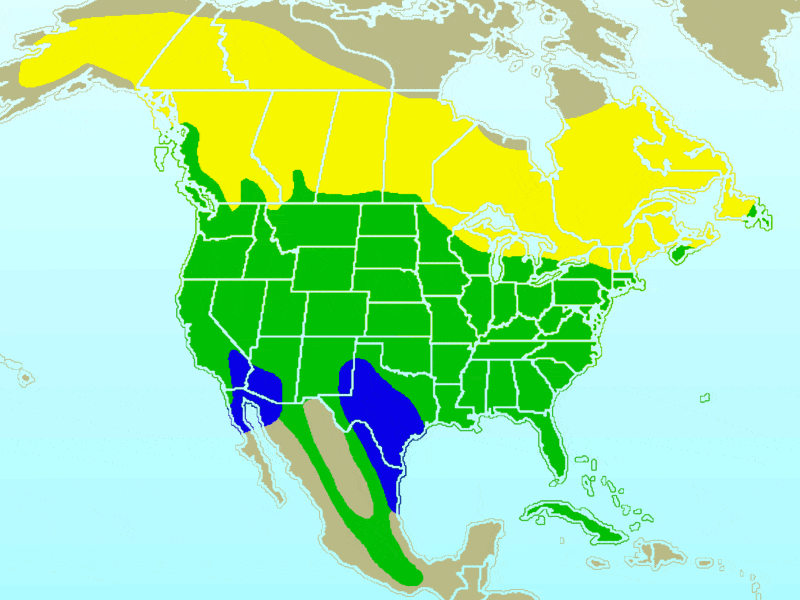
range map of a northern flickeryellow -summer-only rangeblue – winter-only rangegreen -year-round rangeKen Thomas / Public Domain / Wikimedia commons
Northern Flickers tend to like open spaces with a few trees to perch on and seek their food from. They seem pretty content in open woodland and in parks and backyards. Your backyard bird feeder may be enough to attract their attention.
5. Black-Backed Woodpecker (Picoides arcticus)
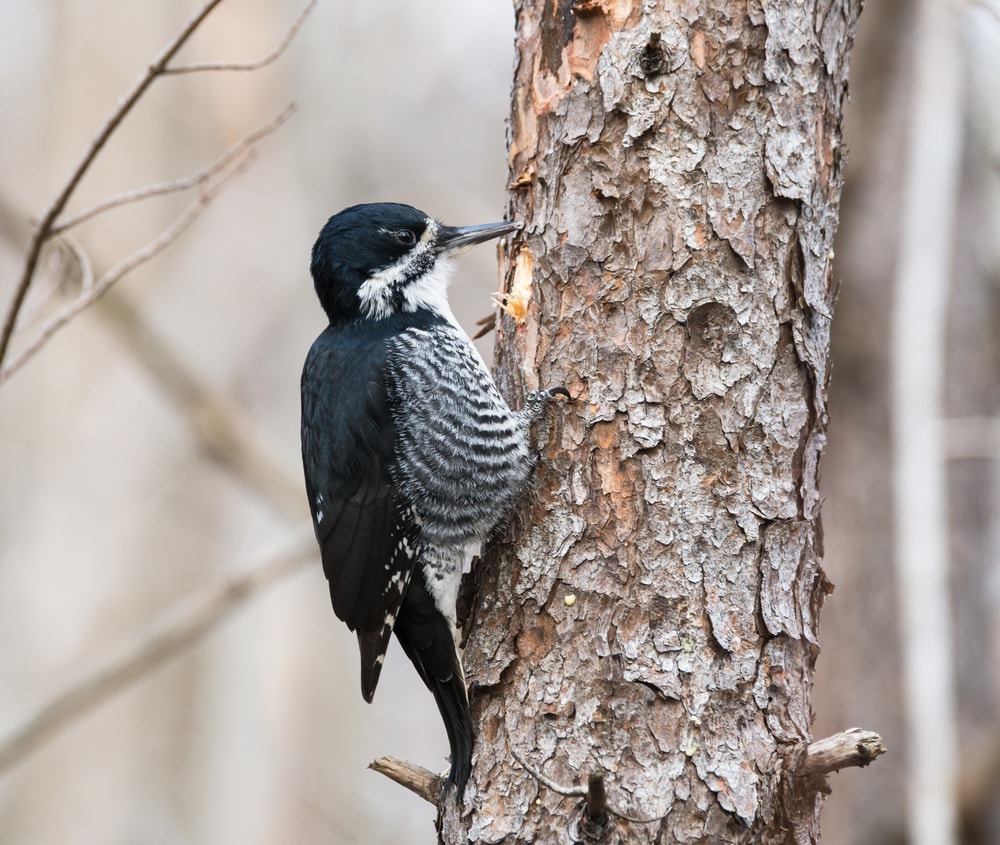
Due to their habit of making homes in regions affected by forest fires, scientists often point to the Black-Backed Woodpecker as evidence that fires and environmental factors in general play a significant role in species evolution. Their presence also serves as a reminder that naturally-burned forests do not result in complete devastation but of rich biodiversity and the chance to re-grow.
Identifying Features
Length: 9.1 in (23 cm)
Weight: 2.1-3.1 oz (61-88 g)
Wingspan: 15.8-16.5 in (40-42 cm)
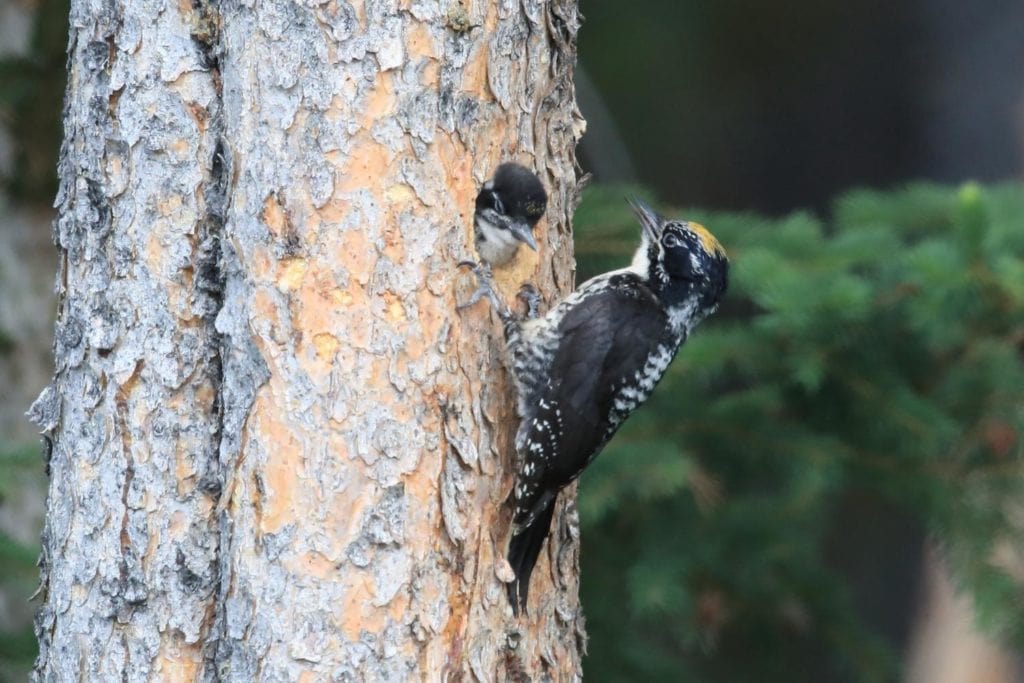
The males are easiest to identify as they have a yellow stripe along their heads. Across both sexes, their backs are black. They have some white beneath and a salt and pepper type chest. Note that Black-Backed Woodpeckers are commonly found in regions of recent forest fires and as such, the white on their bodies may be gray from soot and dirt. Also unique to the Black-Backed Woodpecker is that they have only three toes while all other species of woodpeckers have four.
Where to Find Them
Year-Round: North-East Michigan
Black-Backed Woodpeckers aren’t common to the whole of Michigan as the other birds on this list. They tend to live in a small pocket on the North-Eastern side of the state, straying inland from Lake Michigan. The best place to find them is in fire-damaged forests. They will likely stay for several years until the insect population of the region also declines and then migrate to another forest for a new food source.
6. Red-Bellied Woodpecker (Melanerpes carolinus)
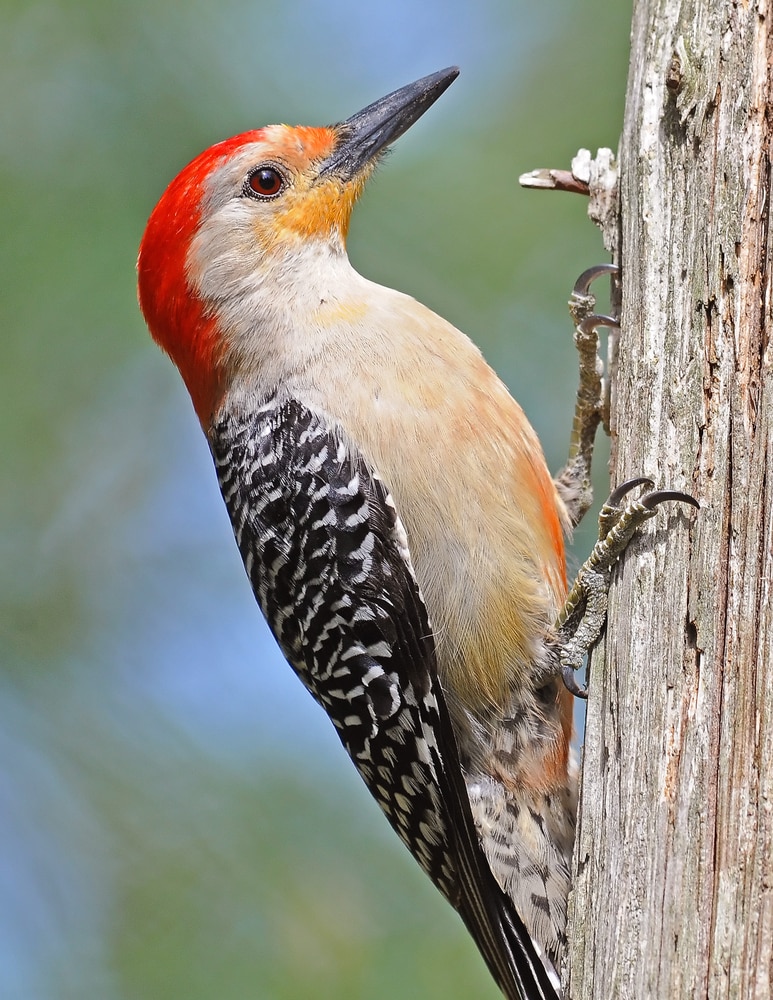
Despite their name, their red-hued belly can be difficult to see in the wild but their other identifying features can help even the newest bird-watcher find one.
Identifying Features
Length: 9.4 in (24 cm)
Weight: 2.0-3.2 oz (56-91 g)
Wingspan: 13.0-16.5 in (33-42 cm)
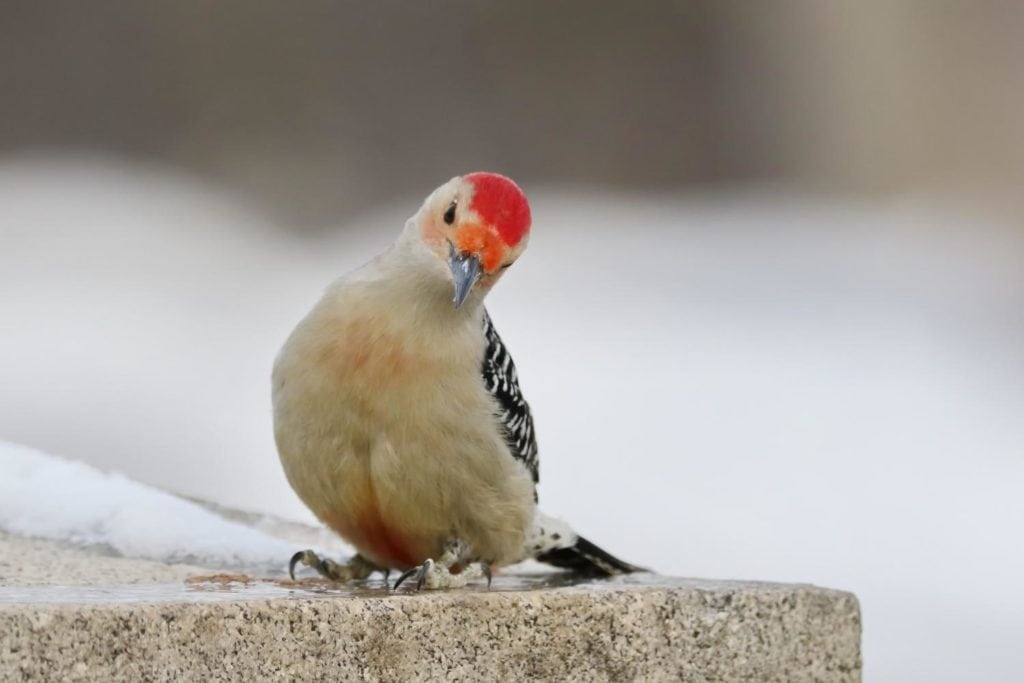
Aptly named, Red-Bellied Woodpeckers boast a coating of pale red along their chest and bellies. Their backs and wings tend to be black with small but vibrant stripes of white as well. Their heads also have a fiery, orangish-red coloring met by their black beaks.
Where to Find Them
Year-Round: All over Michigan
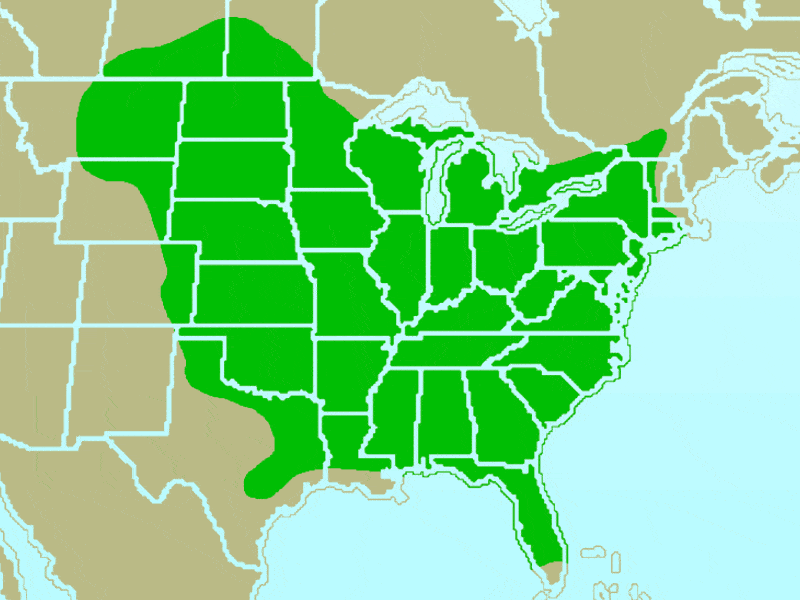
range map of the red-bellied woodpeckerKen Thomas / Public Domain / Wikimedia commons
Red-Bellied Woodpeckers are not migratory birds and tend to stay in the Midwestern Region of the United States year-round. They aren’t picky about their woodlands and will live in old and new growth forests as well as appear in backyard bird feeders.
7. Hairy Woodpecker (Leuconotopicus villosus)
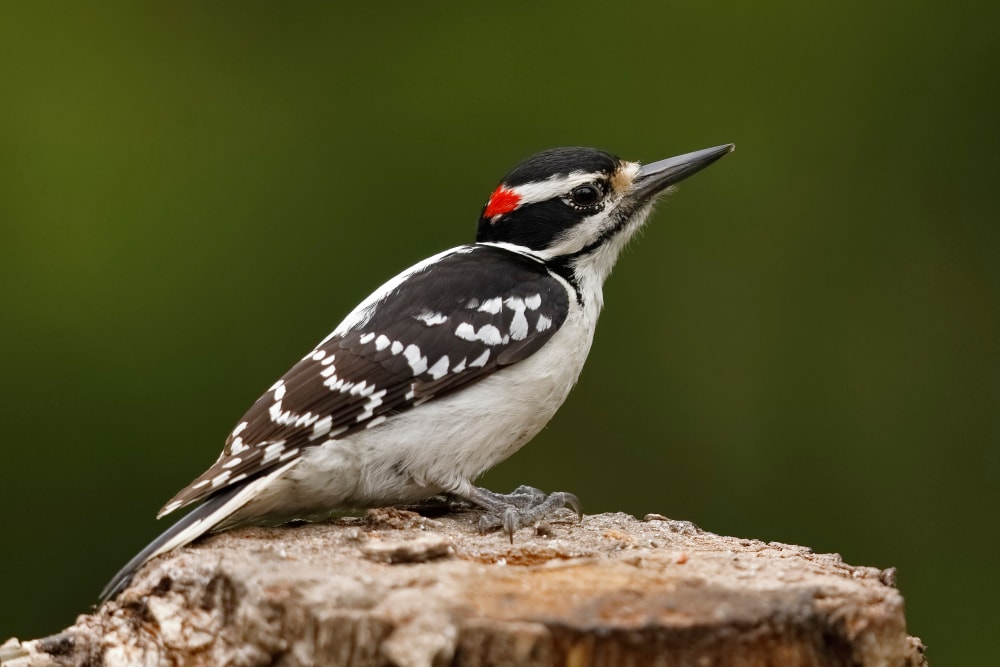
If you’re looking for a relaxing day at home and some backyard bird watching, you can attract Hairy Woodpeckers with peanuts and sunflower seeds in a bird feeder. These little birds will happily come along for some easy-access snacks.
Identifying Features
Length: 7.1-10.2 in (18-26 cm)
Weight: 1.4-3.4 oz (40-95 g)
Wingspan: 13.0-16.1 in (33-41 cm)
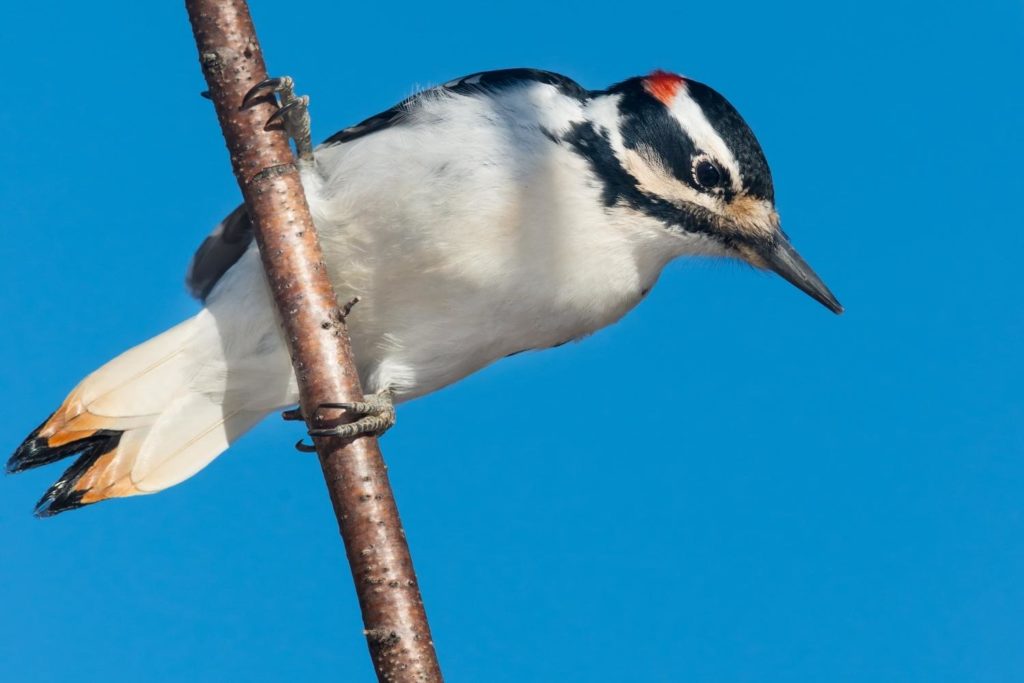
Black and white all over, Hairy Woodpeckers are relatively small creatures. Their heads boast two stripes and their wings have stripes of white cutting horizontally across them. Their otherwise black backs have a splash of white running down them vertically and the males have a small shock of red along their heads.
Where to Find Them
Year-Round: Michigan
Hairy Woodpeckers have adapted well to urbanization. They frequent wooded areas, urban parks, and recently burned forests. They seem to especially enjoy beetle-infested wooded areas and do prefer more heavily wooded areas than urban environments generally allow.
8. Yellow-Bellied Sapsucker (Sphyrapicus varius)
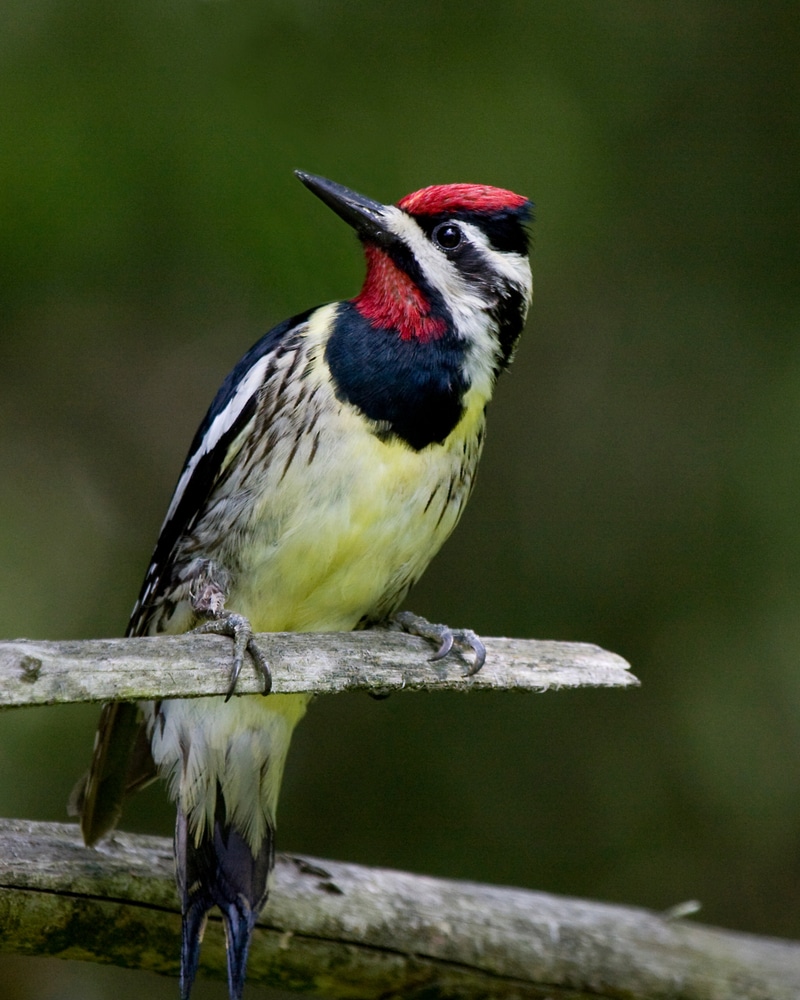
Their name comes from their behavior of drilling or pecking holes into the sap-producing trees which allow the sap to drip out. The sap and the insects it attracts are cornerstone features of its diet. If you see a sapsucker, there’s a pretty good chance a hummingbird is on the way to enjoy the fruit of its labor and drink the sap as well.
Identifying Features
Length: 7.1-8.7 in (18-22 cm)
Weight: 1.5-1.9 oz (43-55 g)
Wingspan: 13.4-15.8 in (34-40 cm)
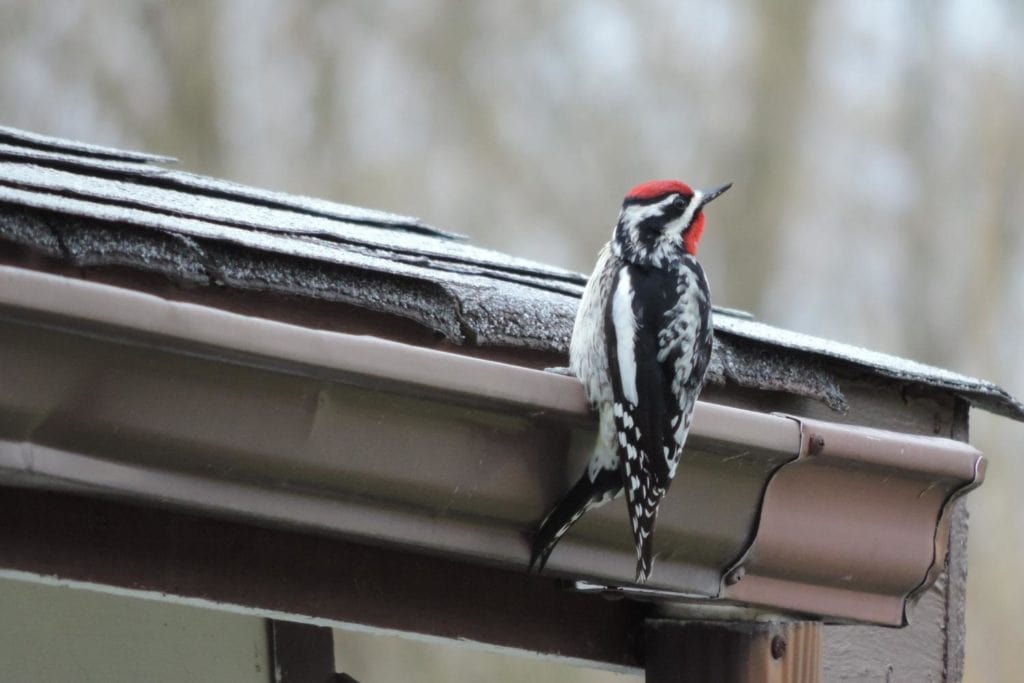
Named for the yellow hue that coats their black and white speckled bellies, it’s also a characteristic that can be difficult to see in the field. Both males and females have a single red stripe along their heads and males have red throats as well. Several woodpecker species have black and white patterned wings so look for a bold, singular stripe of white along the fold of the wing to identify a Yellow-Bellied Sapsucker.
Where to Find Them
Breeding Season: Northern Michigan
Migration Through: Southern Michigan
Yellow-bellied sapsuckers like hardwood and coniferous trees. While it’s not unheard of for them to visit bird feeders, it’s also not a common occurrence. They’ll spend the breeding season in the middle and northern regions of Michigan before passing south to spend the non-breeding season in the warmer southern states of the Continental United States and Central and South America.
You may also like:
.wp-block-kadence-iconlist.kt-svg-icon-list-items_209f08-8c:not(.this-stops-third-party-issues){margin-top:0px;margin-bottom:0px;}.wp-block-kadence-iconlist.kt-svg-icon-list-items_209f08-8c ul.kt-svg-icon-list:not(.this-prevents-issues):not(.this-stops-third-party-issues):not(.tijsloc){margin-top:0px;margin-right:0px;margin-bottom:10px;margin-left:0px;}.wp-block-kadence-iconlist.kt-svg-icon-list-items_209f08-8c ul.kt-svg-icon-list{grid-row-gap:5px;}.wp-block-kadence-iconlist.kt-svg-icon-list-items_209f08-8c ul.kt-svg-icon-list .kt-svg-icon-list-item-wrap .kt-svg-icon-list-single{margin-right:10px;}
.kt-svg-icon-list-item-_8c336f-e0 .kt-svg-icon-list-single{font-size:20px !important;color:#005a38 !important;}.kt-svg-icon-list-item-_8c336f-e0 .kt-svg-icon-list-text mark.kt-highlight{background-color:unset;font-style:normal;color:#f76a0c;-webkit-box-decoration-break:clone;box-decoration-break:clone;padding-top:0px;padding-right:0px;padding-bottom:0px;padding-left:0px;}- The 8 Stunning Woodpeckers In PA: ID Guide With Facts And Pics .kt-svg-icon-list-item-_8962df-a7 .kt-svg-icon-list-single{font-size:20px !important;color:#005a38 !important;}.kt-svg-icon-list-item-_8962df-a7 .kt-svg-icon-list-text mark.kt-highlight{background-color:unset;font-style:normal;color:#f76a0c;-webkit-box-decoration-break:clone;box-decoration-break:clone;padding-top:0px;padding-right:0px;padding-bottom:0px;padding-left:0px;}- 12 Incredible Woodpeckers In Arizona: Identification Guide (Pics And Facts) .kt-svg-icon-list-item-_1a84c9-ed .kt-svg-icon-list-single{font-size:20px !important;color:#005a38 !important;}.kt-svg-icon-list-item-_1a84c9-ed .kt-svg-icon-list-text mark.kt-highlight{background-color:unset;font-style:normal;color:#f76a0c;-webkit-box-decoration-break:clone;box-decoration-break:clone;padding-top:0px;padding-right:0px;padding-bottom:0px;padding-left:0px;}- 7 Amazing Woodpeckers In Illinois (ID Guide With Photos) .kt-svg-icon-list-item-_9d04f2-29 .kt-svg-icon-list-single{font-size:20px !important;color:#005a38 !important;}.kt-svg-icon-list-item-_9d04f2-29 .kt-svg-icon-list-text mark.kt-highlight{background-color:unset;font-style:normal;color:#f76a0c;-webkit-box-decoration-break:clone;box-decoration-break:clone;padding-top:0px;padding-right:0px;padding-bottom:0px;padding-left:0px;}- 40 Different Types Of Birds Across The World: Photos + Facts .kt-svg-icon-list-item-_7146a6-92 .kt-svg-icon-list-single{font-size:20px !important;color:#005a38 !important;}.kt-svg-icon-list-item-_7146a6-92 .kt-svg-icon-list-text mark.kt-highlight{background-color:unset;font-style:normal;color:#f76a0c;-webkit-box-decoration-break:clone;box-decoration-break:clone;padding-top:0px;padding-right:0px;padding-bottom:0px;padding-left:0px;}- The 9 Different Types Of Hawks In Michigan (ID Guide, Pics And Facts)
Discover the different species found in Michigan here:

Fish In Lake Michigan | Snakes In Michigan | Turtles In Michigan | Frogs Of Michigan | Michigan Water Snakes | Hawks In Michigan | Michigan Birds | Owls In Michigan