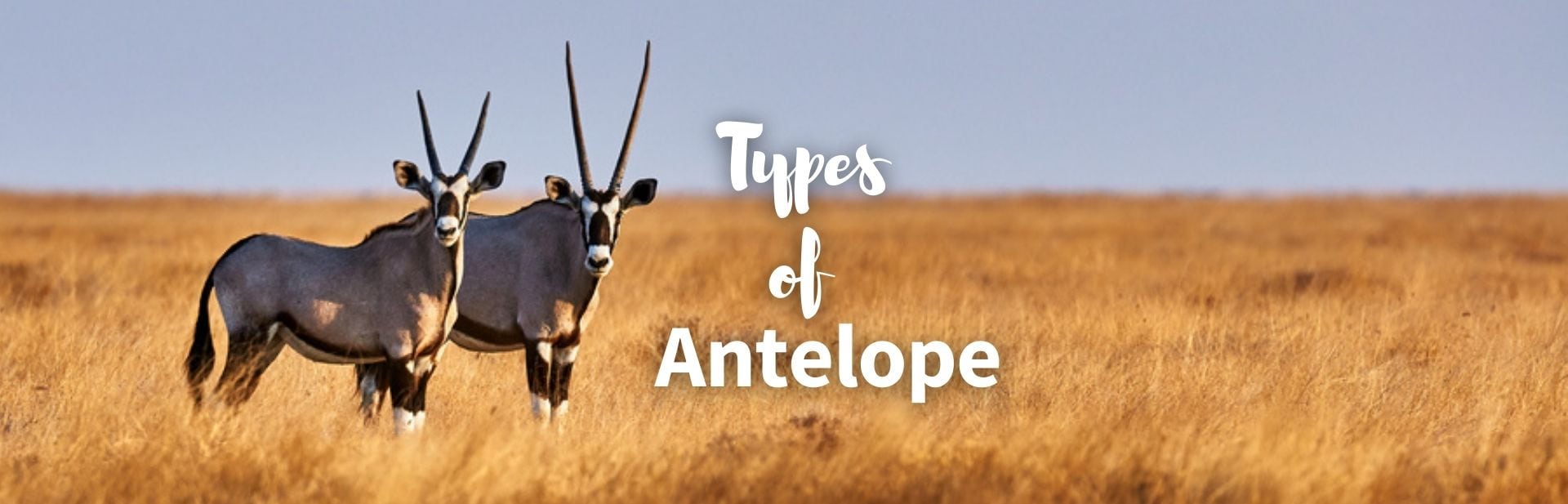
The 15 Most Amazing Types of Antelope (Photos, Facts & More)
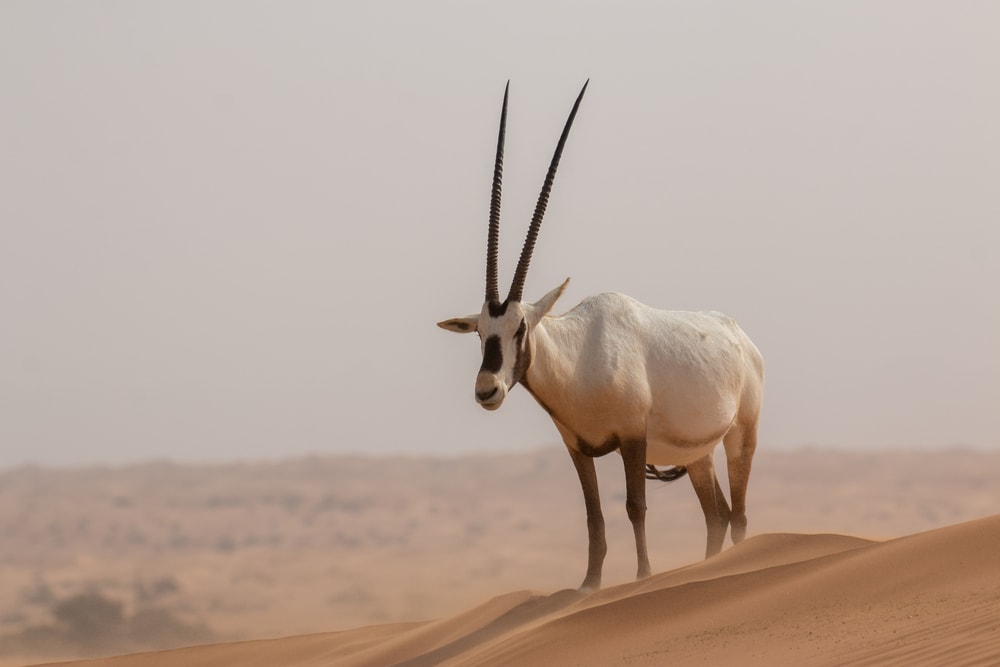
Arabian onyx
Antelopes are majestic animals that come in different sizes, colors, and species types. Unless you are a seasoned scientist, it is not easy to keep tabs on their different genera and species.
In fact, according to research, there are approximately 80 species of antelopes distributed across the world except for Australia-Asia and Antarctica. However, the vast majority are natives of Africa, and part of India, where they freely roam the savannah and the forestlands.
Taxonomically, the antelope is classified in the family Bovidae. Within this family, the antelopes are distributed within several subfamilies, tribes, and genera. If this all sounds confusing to you, worry not, we’ve got your back.
In this article, we will share with you all you need to know about antelopes; classifications, habitat, diets, species types, some fun facts, and more. Let’s dive right in.
You May Also Like: What Do Groundhogs Eat? Almost Anything!
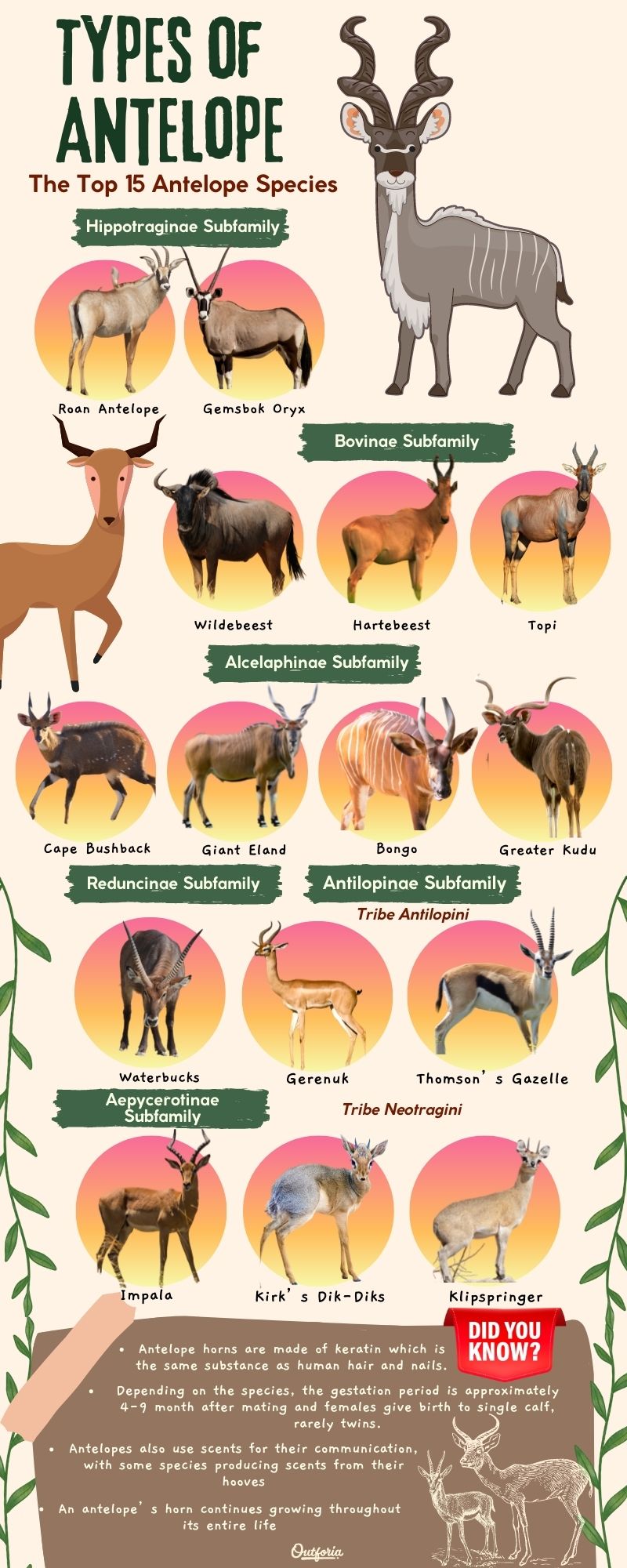
share this image on your site
<a href="https://outforia.com/types-of-antelope/"><img style="width:100%;" src="https://pub-c38b6e8bbd4149d184fca684841a3ecd.r2.dev/images/2022/03/types-of-antelope-infographic.jpg"></a><br>Types of antelope <a href="https://outforia.com">Outforia</a>1. Antilopinae Subfamily
Also known as the true types of antelopes, most members of this subfamily fall under three tribes; Antilopini, Saigini, and Neotragini. Normally, members of this subfamily are widely distributed throughout Eastern and Southern Africa and Asia.
Through the evolutionary process, they have acquired structural adaptations for camouflage and escape from predators. Let’s take a look at a few examples.
1.2 Tribe Antilopini
Species in this tribe are generally considered as the true antelopes. The Antilopines are even-toed ungulates largely found in Eastern Africa and Asia.
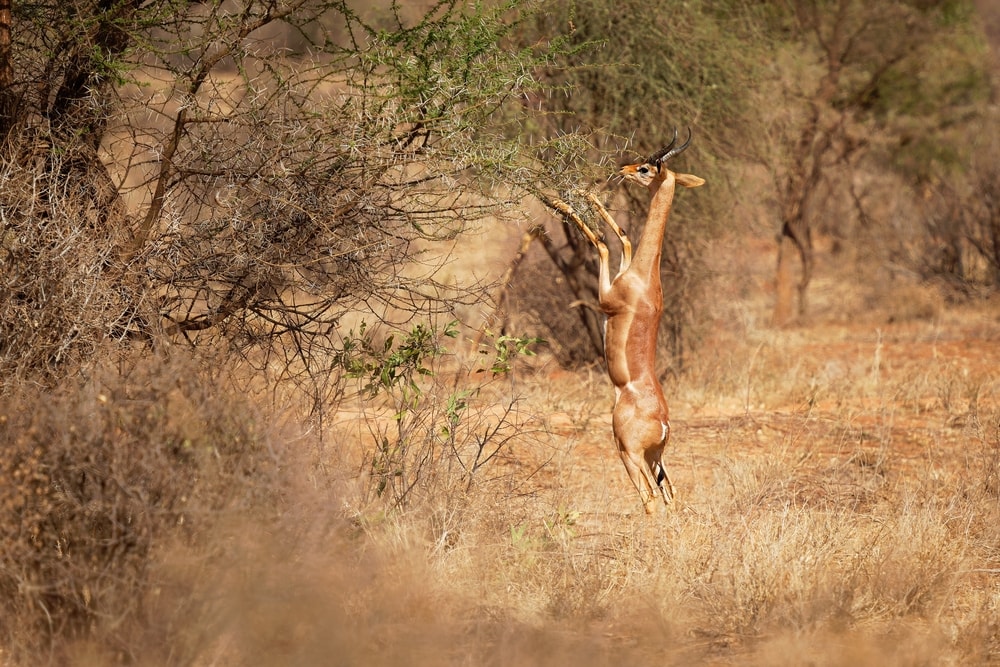
1.2.1 Gerenuk (Litocranius walleri)
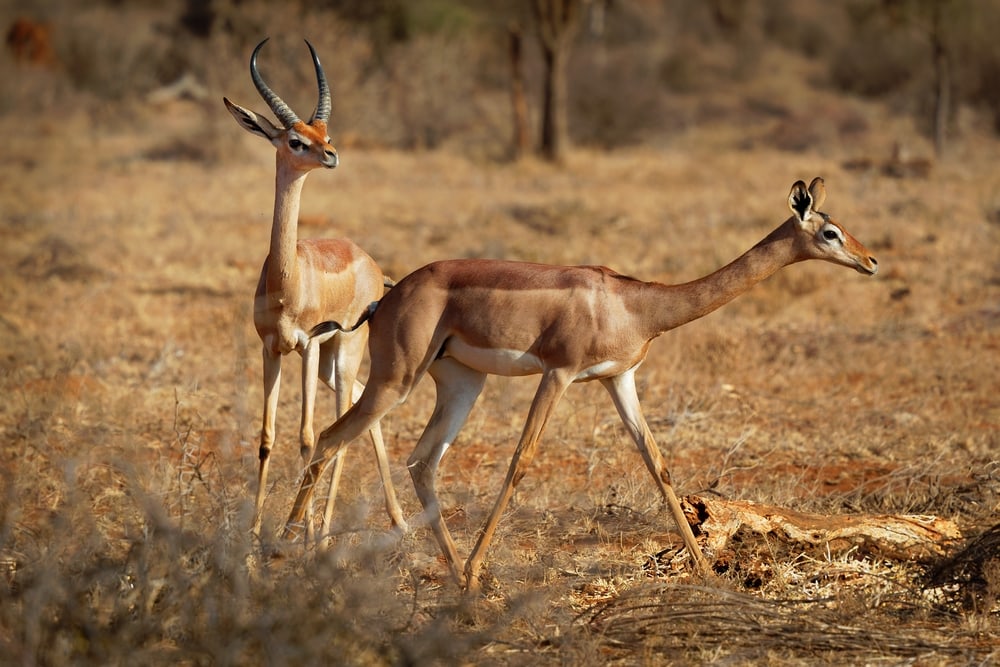
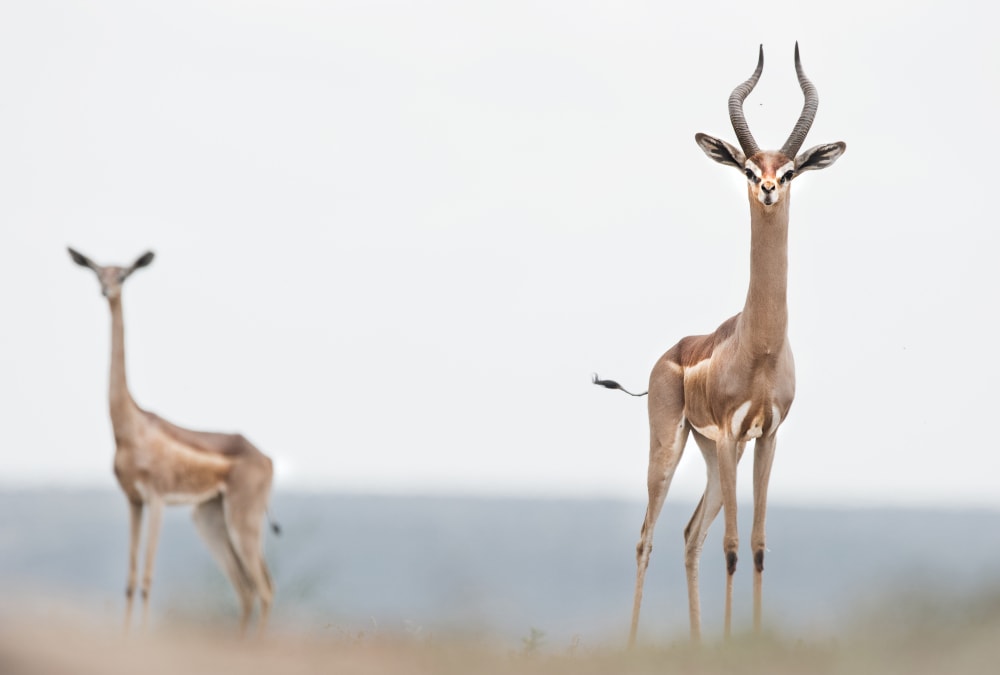
Easily identifiable for their long necks, the gerenuks are also known as the giraffe antelope. They have small heads and sharp alert ears. Mostly, they are browsers and love to reach for tall trees by standing on their hind legs.
Their coat colors are a mix of white and brown. And when it comes to horns, unlike females, males grow short pointed horns.
Sadly, gerenuk populations are on a downward trend. This has been occasioned by hunting and clearing of its habitat for farming and infrastructure development.
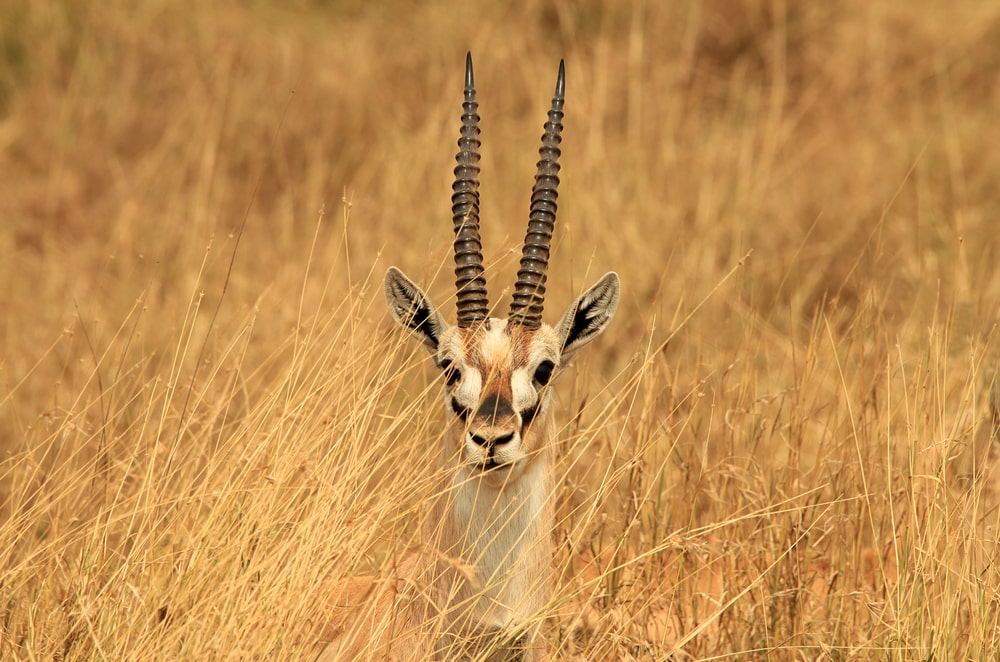
1.2.2 Thomson’s Gazelle (Eudorcas thomsonii)
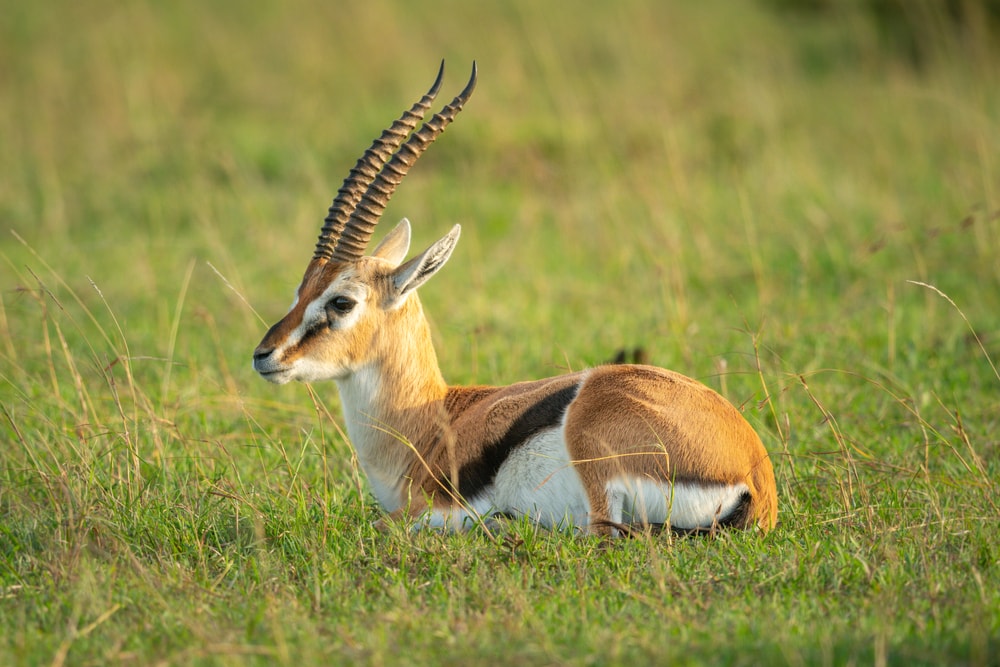
The Thomson’s is one of the agile and beautiful antelopes in the savanna. Named after the explorer Joseph Thomson, it is an inhabitant of the Eastern and Central African regions.
Often, the aesthetic animal is found among the shrublands where they are voracious browsers. The distinctive feature of this antelope is their backward curving horns whose tips curve forwards.
Moreover, they have a yellowish-brown skin color on most parts of the body except the white belly and stripes on both sides of the face.
1.2 Tribe Neotragini
In this tribe, are found some of the well-known types of antelopes. Just like in the Antelopini tribe these antelopes are widely distributed across most savanna grassland of Africa and Asia.
1.2.1 Kirk’s Dik-Diks (Madoqua kirkii)
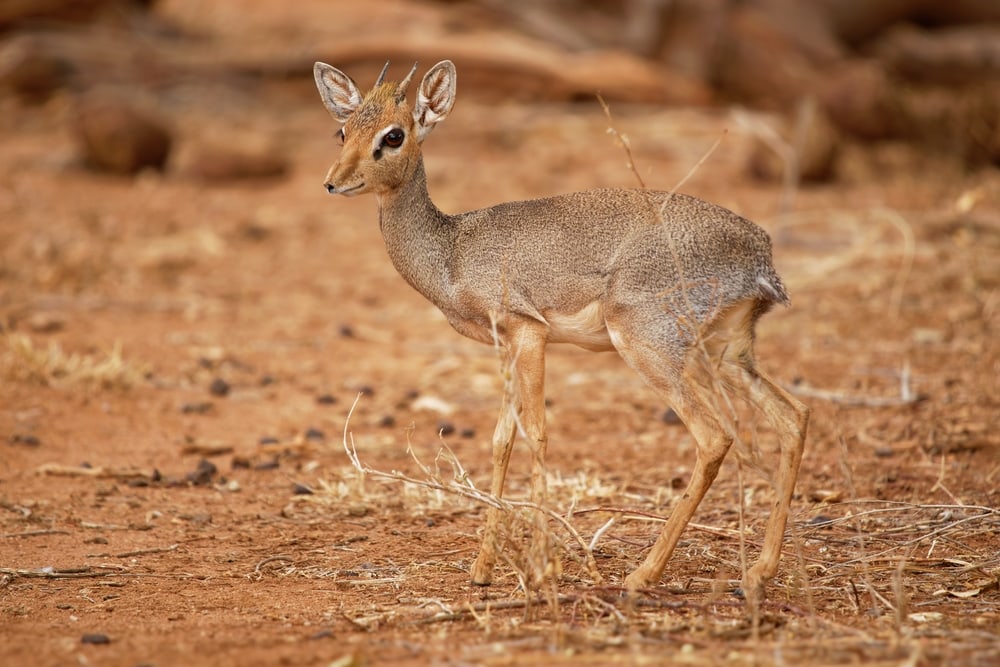
Weighing approximately 6kgs (13lbs) and 0.7m (2ft) tall, the dik-dik is one of the smallest antelopes. Their coat color ranges from reddish-brown to yellowish-gray. Like most of the other antelope species, horns only grow in males.
Furthermore, the shy animal’s best habitat is the cover of shrublands in the African savanna. Notwithstanding the size, dik-diks are heavy feeders which are attributable to their high metabolic rate.
In case you were wondering, the Dik-diks derive their name from the unique sound they produce in danger
1.2.2 Klipspringer (Oreotragus oreotragus)
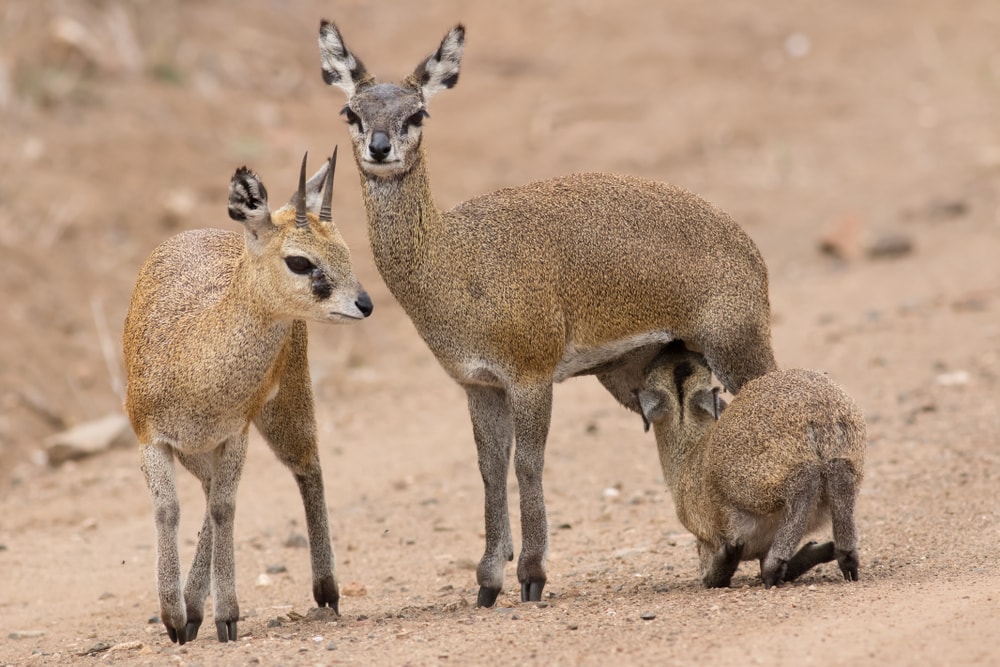
Klipspringers are mainly found in Northeastern to Southern Africa. Also known as the rock jumper, they have a reddish-brown to yellowish-gray coat color, which is perfect camouflage against predators.
Surprisingly, Klipspringers are known to live a lifelong monogamous relationship. They are ravenous feeders with the favorite diet of soft twigs, fruits, and leaves.
On the threat of extinction, according to the IUCN, the klipspringer is classified as, “least concern”. This means it is not under any threat of immediate extinction.
The species we’ve discussed above are by no means the only members of this subfamily. Numerous other species are distributed across the following 15 genera;
- Ammodorcas
- Antidorcas
- Antilope
- Dorcatragus
- Eudorcas
- Gazella
- Litocranius
- Madoqua
- Nanger
- Neotragus
- Oreotragus
- Ourebia
- Procapra
- Raphicerus
- Saiga
You may also like: Check Out the More Than 21 Species of Animals with Antlers and Horns: With Images, Facts, and More!
2. Hippotraginae Subfamily
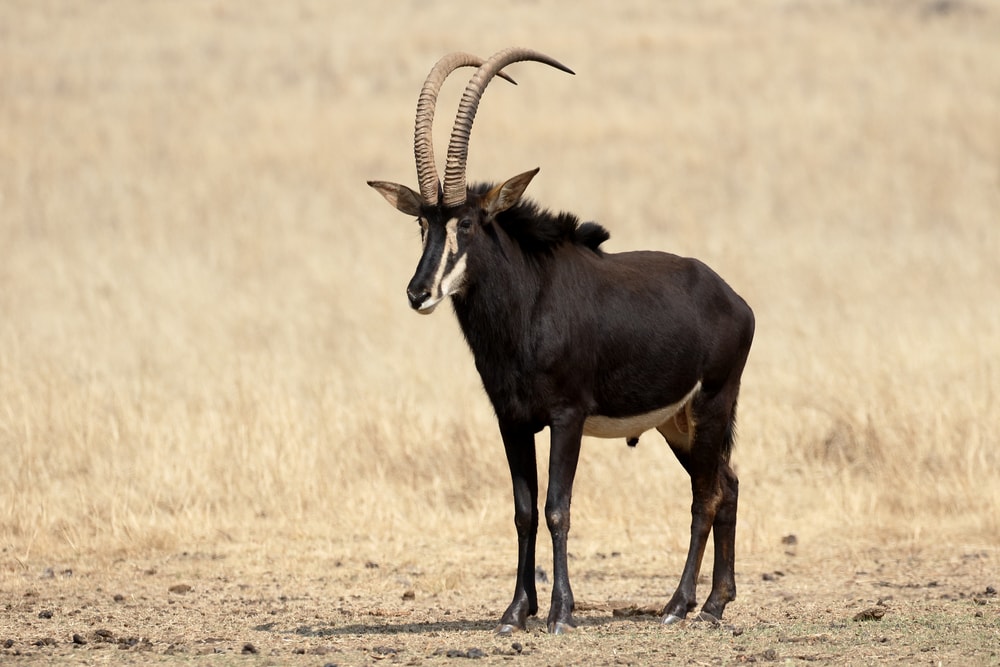
sable antelope ( Hippotragus niger)
Most of all grazing types of antelopes are classified in this subfamily. Taxonomically, they are under the Hipotragini tribe, which interestingly comes from the word “hippo”.
This is due to their horse-like body structure; long legs, compact bodies, and thick muscular necks. Antelopes in the Hippotraginae family are widely distributed in the savanna rangelands of Africa and Asia.
Here are a few examples.
2.1 Hippotragini
2.1.1 Roan antelope (Hippotragus equinus)
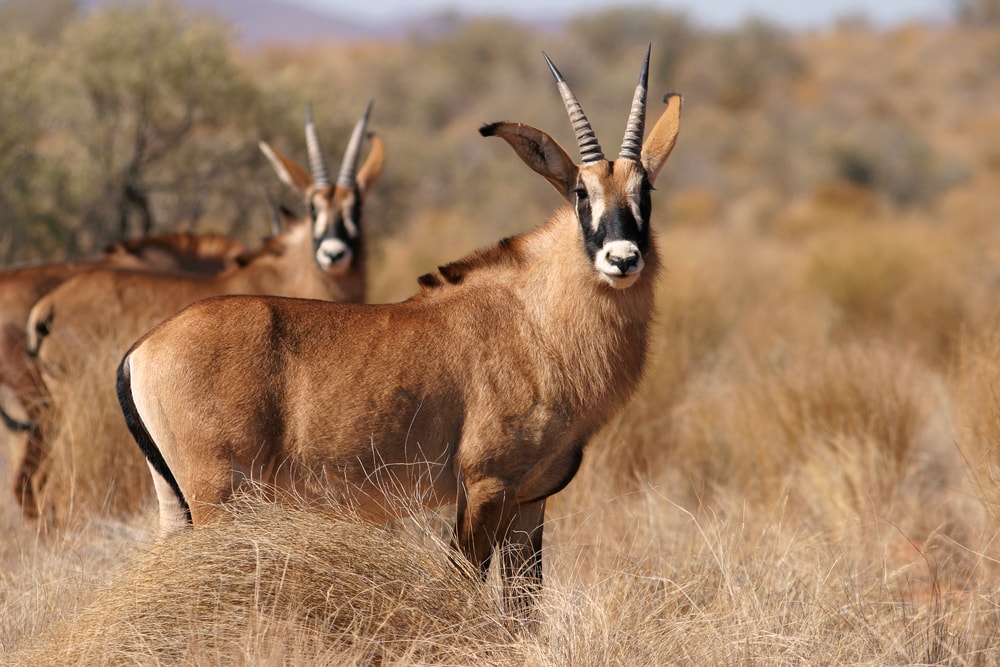
The roan antelope is one of the largest antelopes, only smaller than the eland and the bongo. Funnily, the bongo has a black and white clownish mask face, and a reddish-brown(roan) coat from which it is named.
Also, the roan antelope males have long horns, though shorter in females, which are curved backward. Amazingly, with these horns, they can even kill a lion if it doesn’t overpower it fast enough.
Their diet consists mainly of shoots, variety of leaves, and grasses. Antelopes are territorial animals where they live in a group of 5-15 defended by the dominant males. The roan antelopes need protection as they’re some of the endangered species.
2.1.2 Gemsbok Oryx(Oryx gazella)
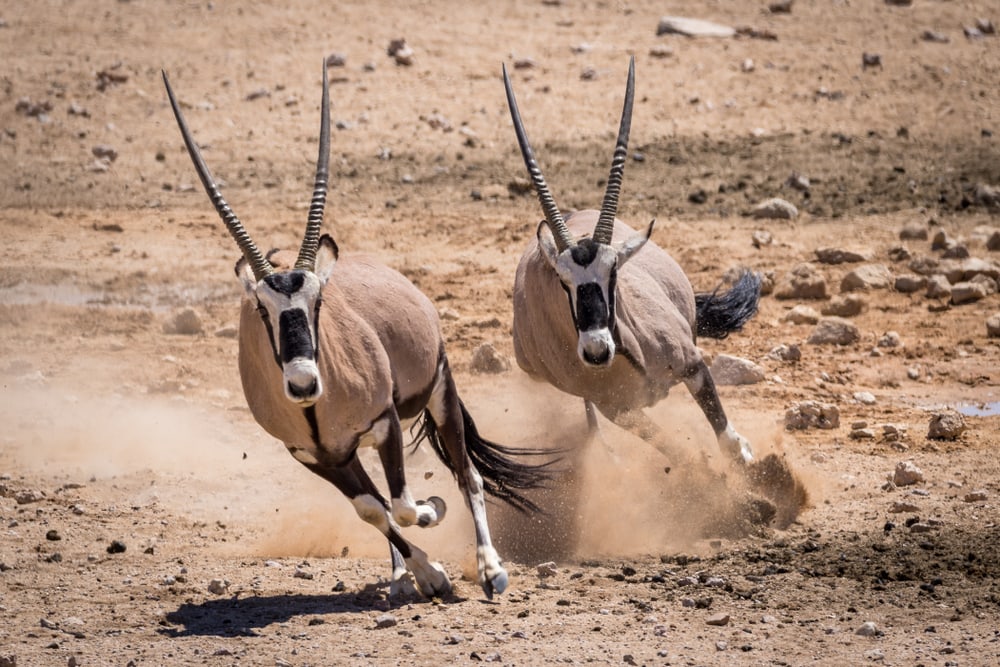
Gemsbok Oryxes are powerfully built, with short muscular necks, and broad shoulders. Interestingly, gemsboks are well adapted to the extremely arid and semiarid.
According to research, these types of antelopes can survive in high temperatures of up to 45 Degrees Celcius ( 113 Fahrenheit), without water for 9-10 months. Males have long horns and pale coat color with white markings on the legs and face. They are also known to be territorial and aggressive.
In contrast, females are very caring and on giving birth they hide their young ones and feed them in seclusion. This goes on for the first three weeks before they join the rest of the herd.
There are other species, found in the following genera.
- Addax
- Hippotragus
- Oryx
3. Reduncinae Subfamily
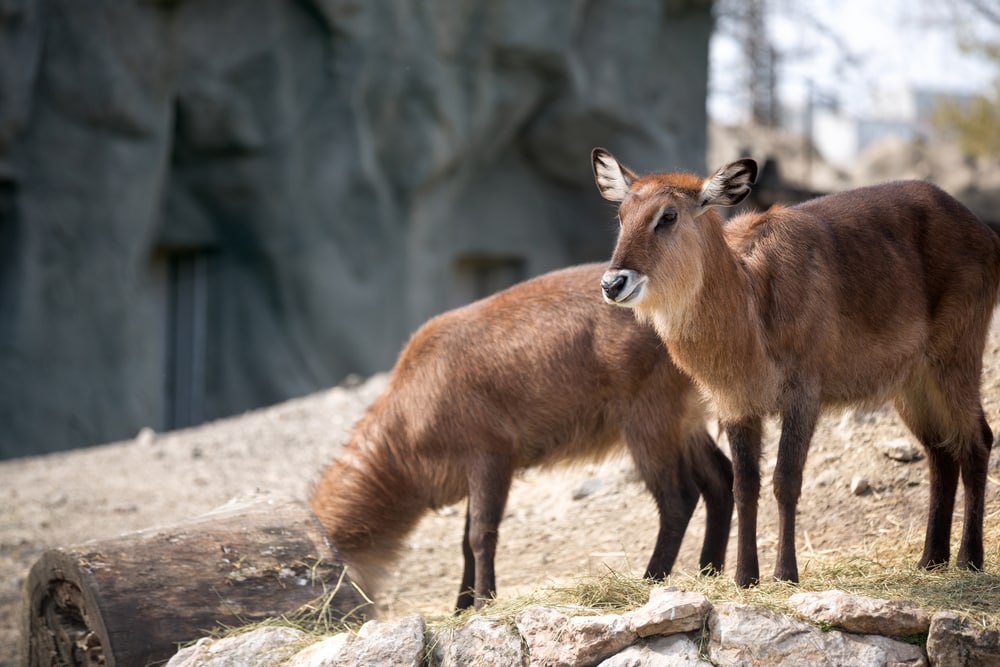
waterbucks
Compared to other types of antelopes subfamilies, the Reduncinae is small and mostly consists of species under the tribe Reduncini.
3.1. Reduncini
All the nine species in this subfamily, are widely distributed in marshlands and floodplains in Africa and Eurasia.
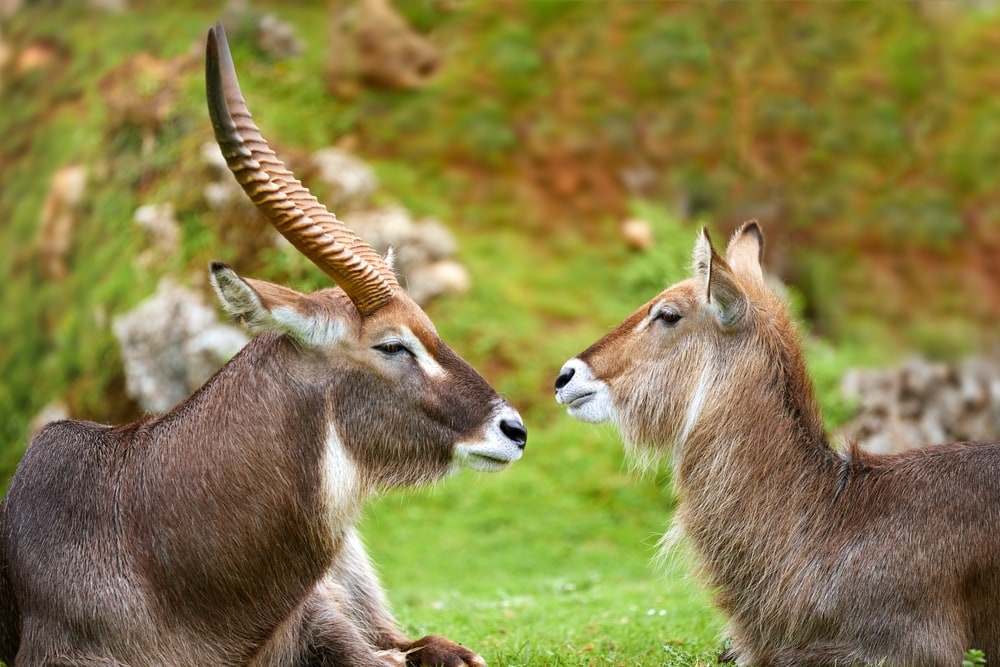
3.1.1 Water Bucks (Kobus ellipsiprymnus)
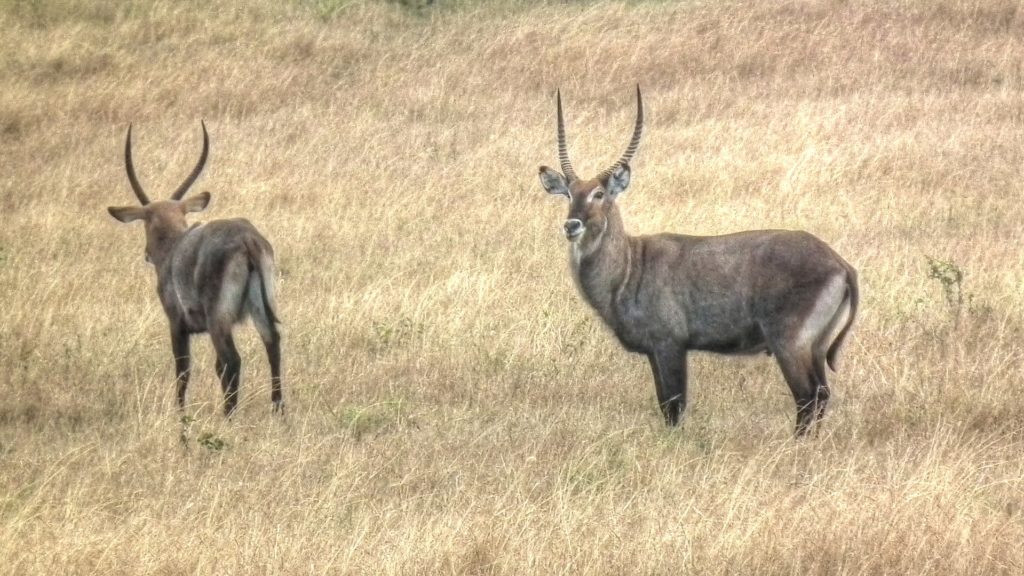
Aptly named, the waterbuck thrives best in the wetlands. Due to their inability to tolerate the savanna heat, they thrive best in the cool wetland areas, which also helps in keeping off predators.
Waterbucks instinctively move deeper into the water on sighting leopards or lions, or other predators. This helps in evading them as most cats’ family species are not great swimmers. Waterbuck diets mainly consist of coarse grass, found in waterlogged areas.
Other members of the Reduncinae subfamily are found in the following two genera.
- Redunca
- Kobus
You may also like: Learn the Difference Between Leopards vs Jaguars: With Images, Facts, Descriptions, and More!
4. Aepycerotinae Subfamily
4.1.1 Impala (Aepyceros melampus)
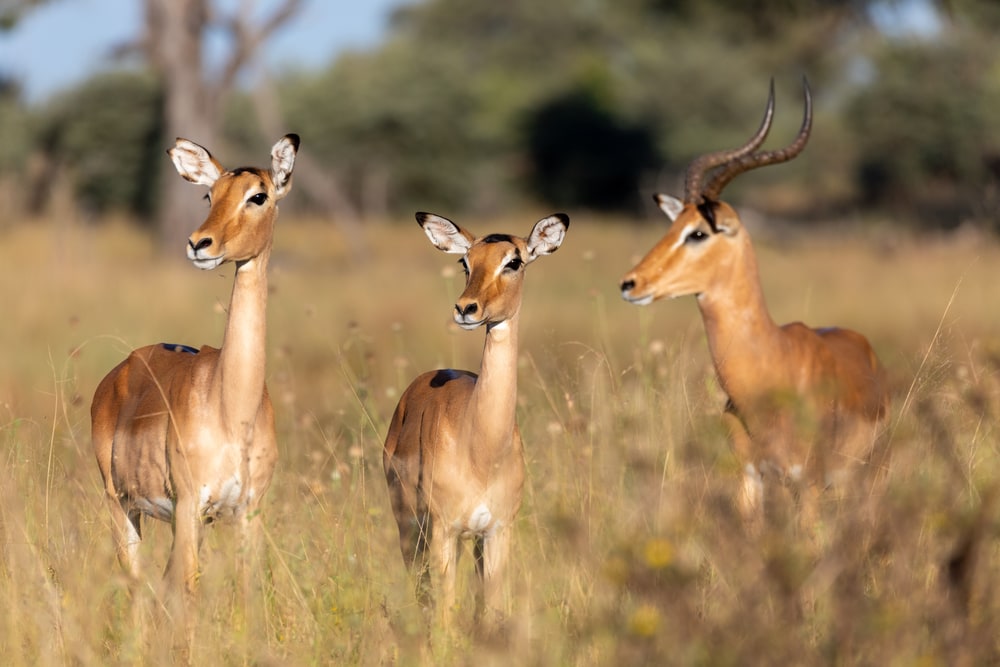
According to taxonomists, there is only one living genus in this subfamily, the Aepyceros, the impala.
They are common inhabitants of Southern and Eastern African savanna, where they are grazers and browsers. One of the impressive features of impalas is their speed.
Impalas can sprint at speeds of up to 90kms/hour, where it makes high leaps, a thriller to wildlife enthusiasts. Ordinarily, males are larger than females, and sometimes they form bachelor groups of up to 30 members.
5. Bovinae Subfamily
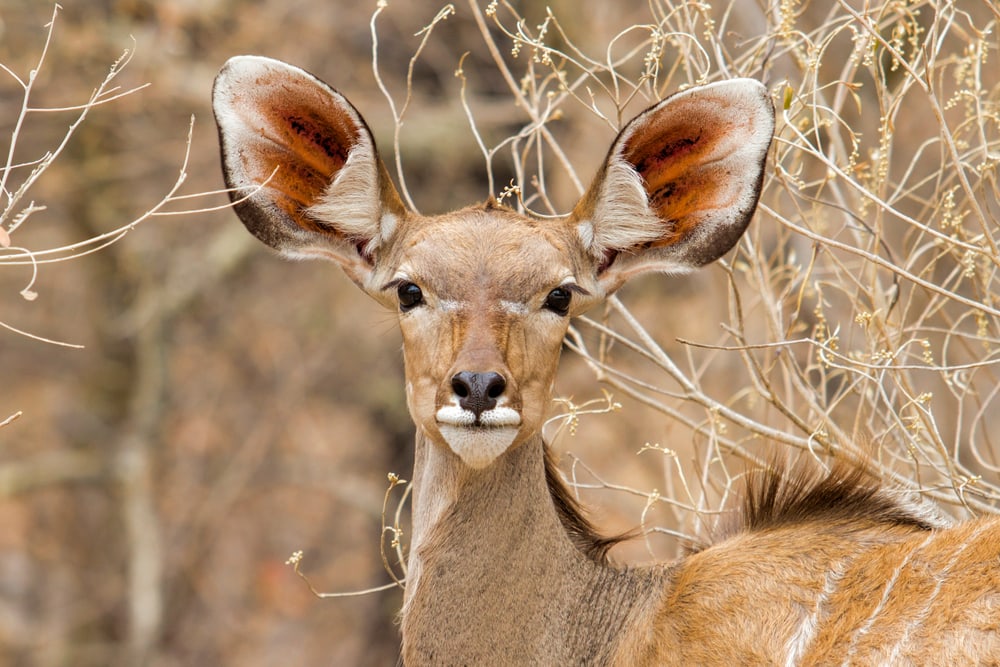
female greater kudu
All the members of this subfamily are medium to large-sized animals from ten genera. In this subfamily, antelopes are classified in the tribe Tragelaphini under the following two genera.
- Tragelaphus
- Taurotragus
5.1. Tribe Tragelaphini
5.1.1 The Giant Eland (Taurotragus derbiunus)
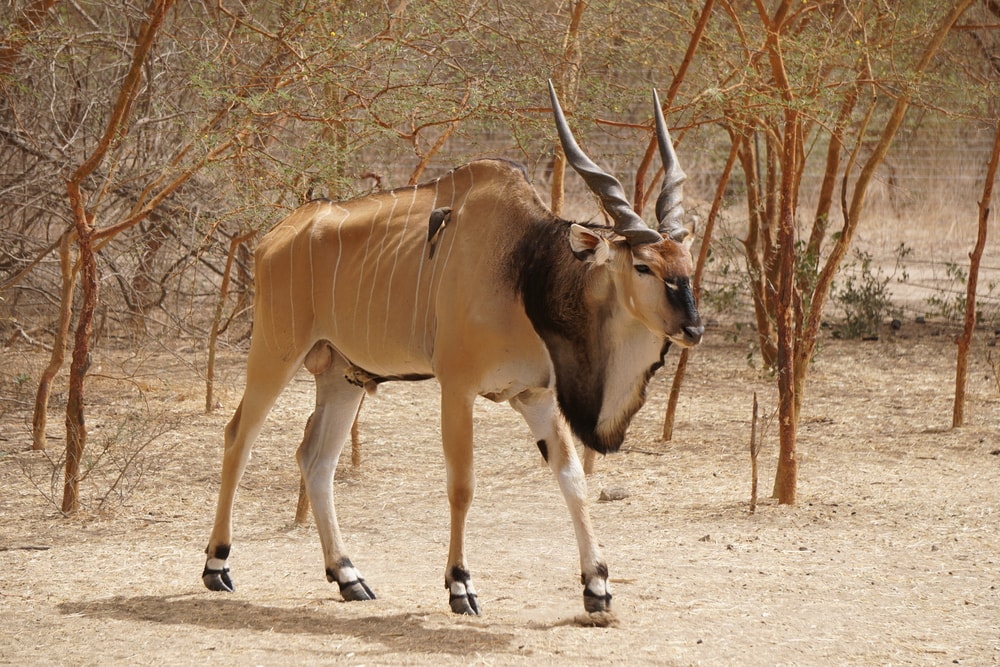
Also known as Lord Derby Eland, the Giant eland is one of the largest antelopes, with mature males weighing up to 1000 kgs (2204 lbs). Another striking feature is the V-shaped spiraled horns.
Mature males’ horns can grow up to four feet in length, though shorter in females. Typically, the giant elands are chestnut-brown apart from the strip of black hair running down their backs.
Furthermore, they spot distinctively white vertical stripes on each side of their body, and a large piece of skin also known as a dewlap.
Unfortunately, Elands are considered endangered, due to poaching and clearing of their habitats.
5.1.2 The Bongo (Tragelaphus eurycerus)
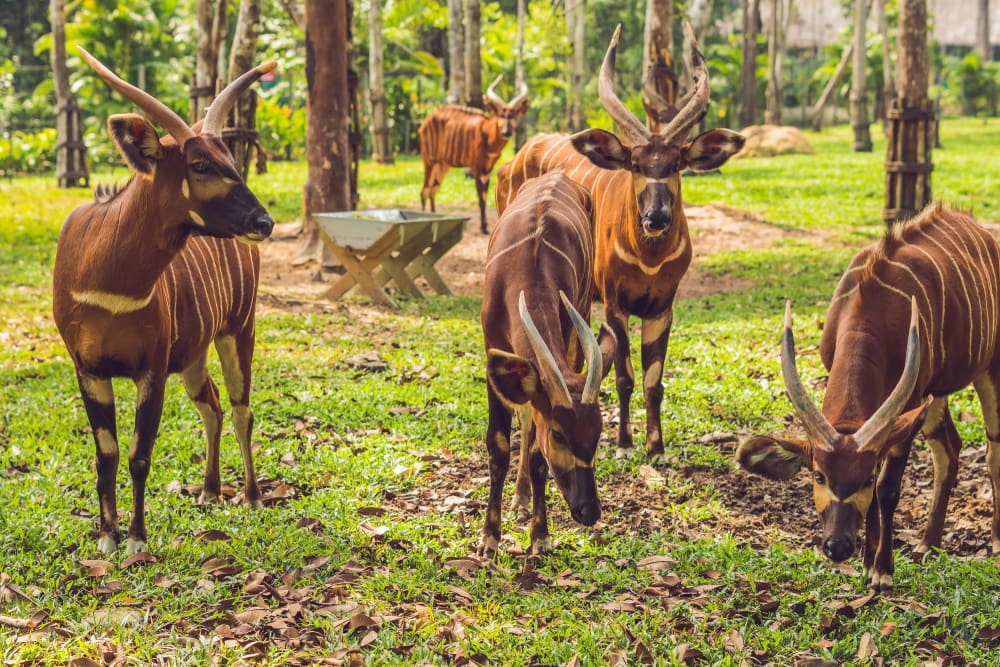
Resembling the Eland in color, the Bongo is another of the large antelopes. While both animals have chest brown coat colors and white stripes on both sides of their bodies, Bongos are much smaller compared to the elands.
Averaging 900lbs (400kgs), adult male bongos are larger than their female counterparts which weigh approximately 500lbs (230kgs).
Like most other antelopes, Bongos are grazers and browsers. But, they also love salt licks and can walk long distances in search of the commodity.
5.1.3 Greater Kudu (Tragelaphus strepsiceros)
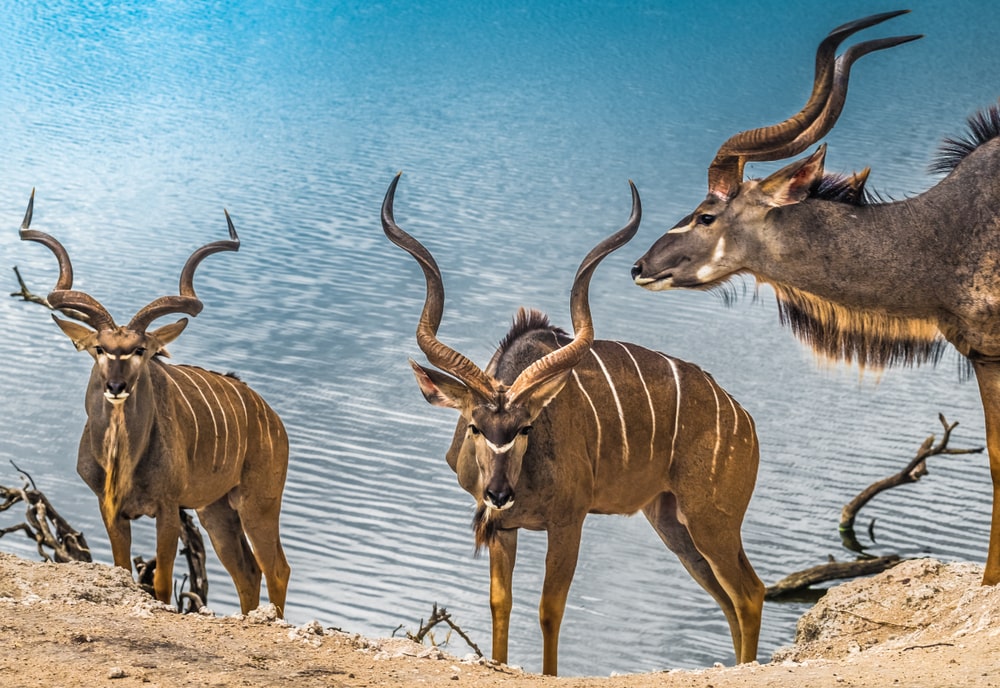
Also known locally as the Kodoo, this antelope is an inhabitant of Southern Africa. Males grow beards, and long twisted horns, which at 71inches(180cms), are the longest of any antelope.
Remarkably, kudus are gregarious animals that live in groups of up to 15 members. Within these groups, they are ever alert and one herd member will let out a sudden grant to alert others of the presence of predators.
Sometimes, males form bachelor groups also known as stags. However, during the breeding season, they join the rest of the herd for mating.
5.1.4 Cape Bushbuck (Tragelaphus scriptus)
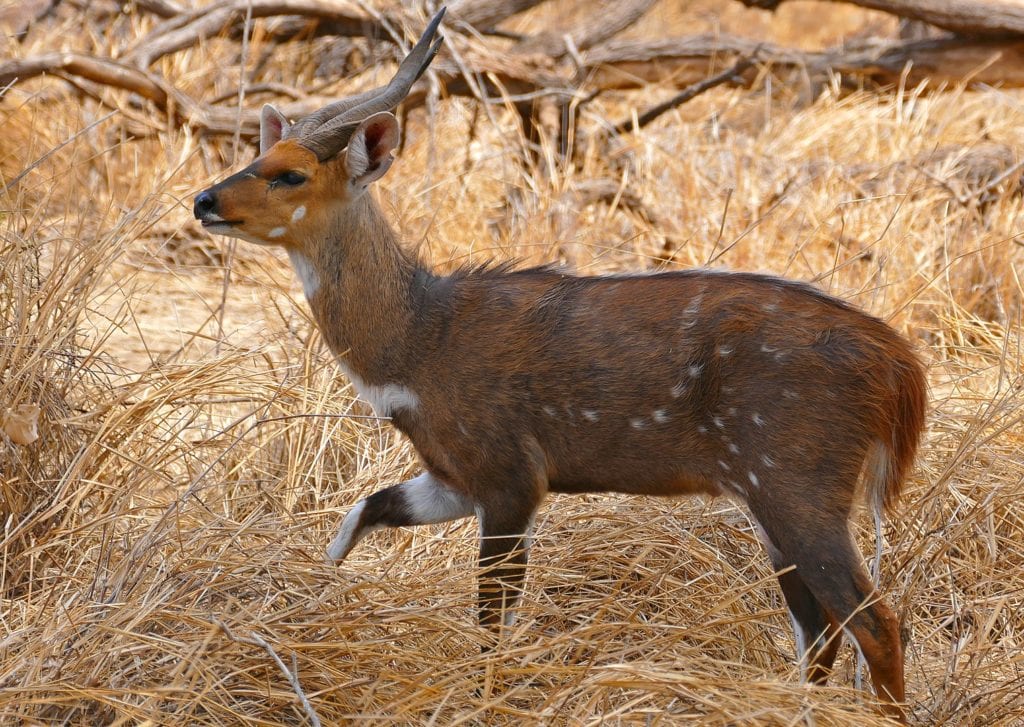
Bernard DUPONT / CC BY-SA 2.0 / Wikimedia commons
Widely distributed throughout Eastern and Southern Africa, the mid-sized antelope has a conspicuous grayish-brown coat color, with white spots in parts of its legs. Only males grow single twisted horns.
The midsized types of antelopes are not known to be vocal but largely rely on scent for communication, unless in extreme danger.
They like to live close to human habitation where they feed on crops which creates conflict with farmers. This has resulted in a decrease in their numbers in recent years.
You may also like: Learn What a Keystone Species is and the Keystone Species Examples: With, Images, Facts, Description, and More!
6. Subfamily Alcelaphinae
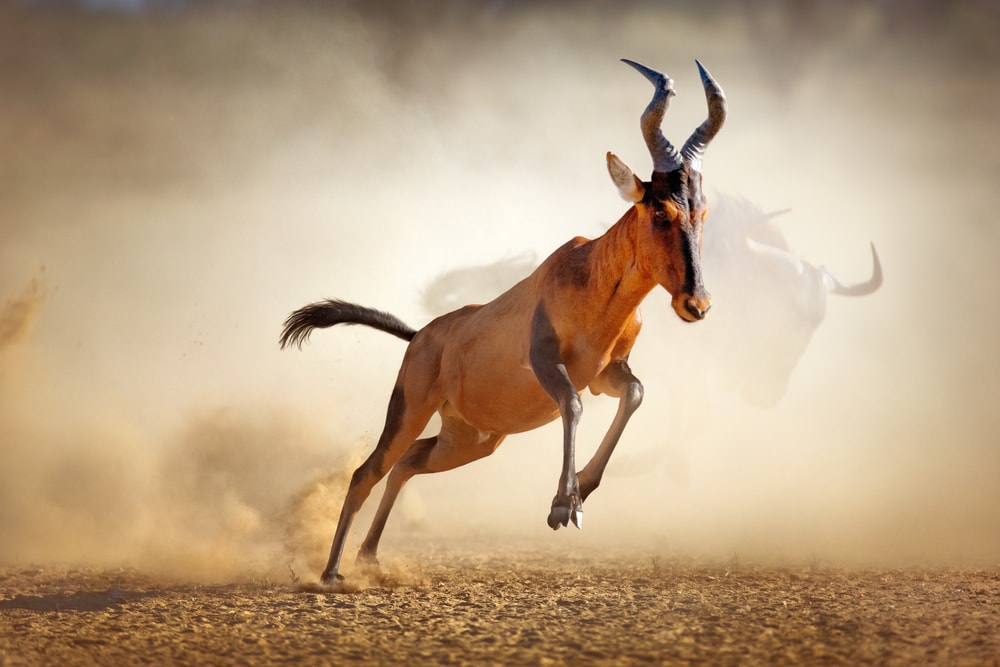
Red hartebeest (Alcelaphus caama)
There is no consensus on the number of species in this subspecies. But, generally, different classification methods place between 6-10 species spread across the following four genera;
- Beatragus
- Damaliscus
- Alcelaphus
- Connochaetes
Below are some of the species in this subfamily
6.1 Alcelaphini
6.1.1 Wildebeest (Connochaetes taurinus)
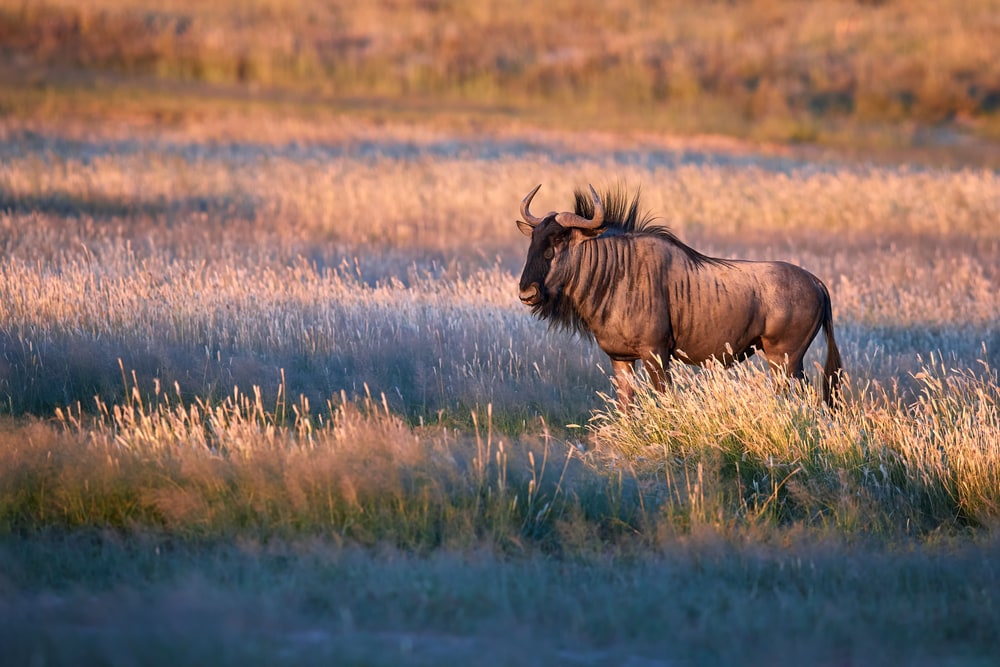
Also known as Gnu, the wildebeest mostly roam the Southern and the Eastern Africa plains as they forage for pasture. A typical wildebeest herd is hugely moving around in herds consisting of tens of thousands of animals.
The wildebeest have clear migratory patterns. For instance, in East Africa, they migrate yearly from July to August. Over this period, wildebeest estimated at 1.5 million crosses over the flooded Mara river from Kenya’s Masai Mara to Tanzania’s Serengeti National Park.
A spectacular event dubbed “the eighth wonder of the world”, this is a must-watch event in this part of the world.
6.1.2 Hartebeest (Alcelaphus buselaphus)
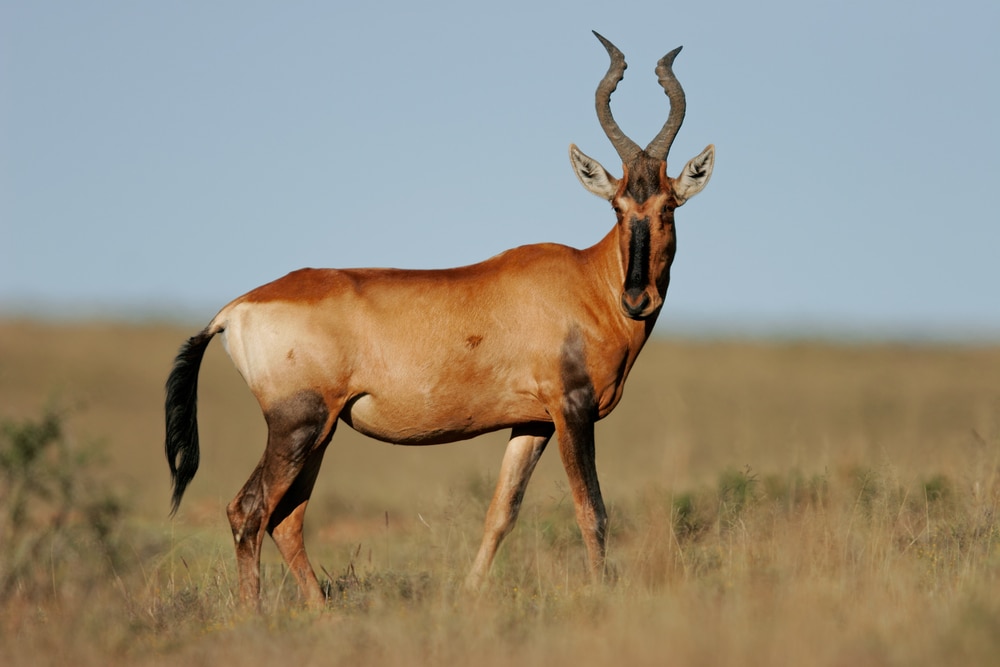
Hartebeest is a gentle animal. Like most types of antelopes, they are grazers and can be found in grazing in the savanna plains of Southern Africa. Generally, they graze in large numbers of up to 10,000 members.
On predation, the Hartebeest is an alert animal with a dominant male taking up position on an anti-hill to keep watch out for predators even for hours.
Sadly, hartebeests are classified as either “endangered” or “critically endangered”, meaning they severely need protection from extinction.
6.1.3 Topi (Damaliscus lunatus jimela)
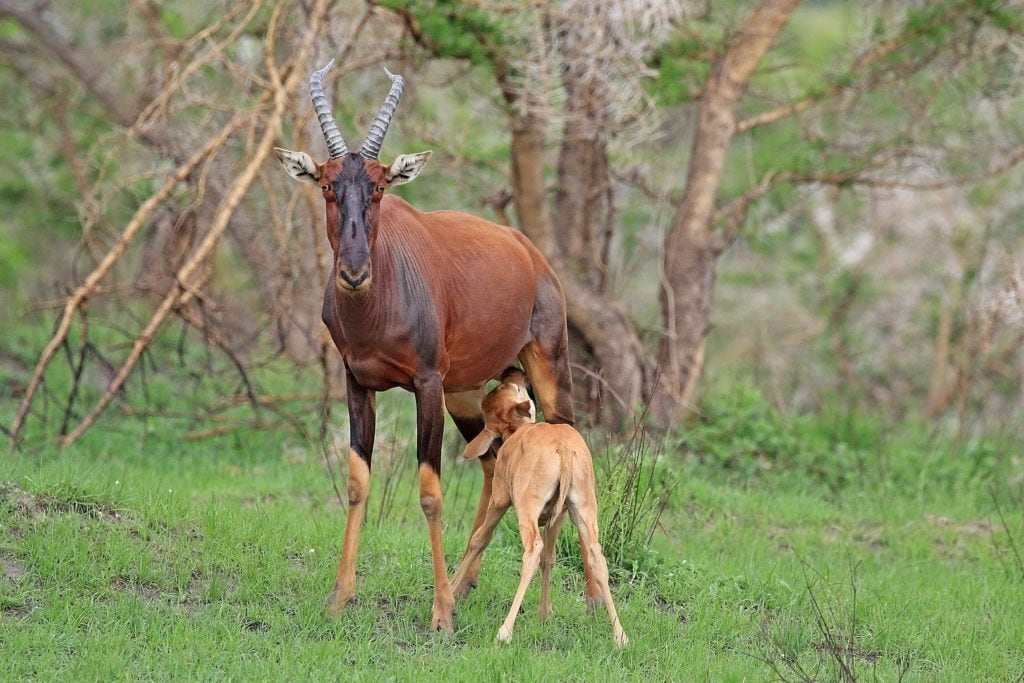
Often, the Topi antelopes are confused with their close cousins the hartebeest. However, while both have reddish-brown coats, the Topis have distinctive purple patches on their legs.
Besides, their ringed lyre-shaped horns are not as prominent as those of the hartebeest. Compared to males, females have a lighter brown color.
Most are grazers, and in contrast to most other antelope species, they are territorial, unfriendly animals. Shockingly, these can run fast, in a bounding running style.
You may also like: Learn the Top Animals With the Strongest Bite Force on the Planet: With Images, Facts, and More!
Interesting Facts About Antelopes
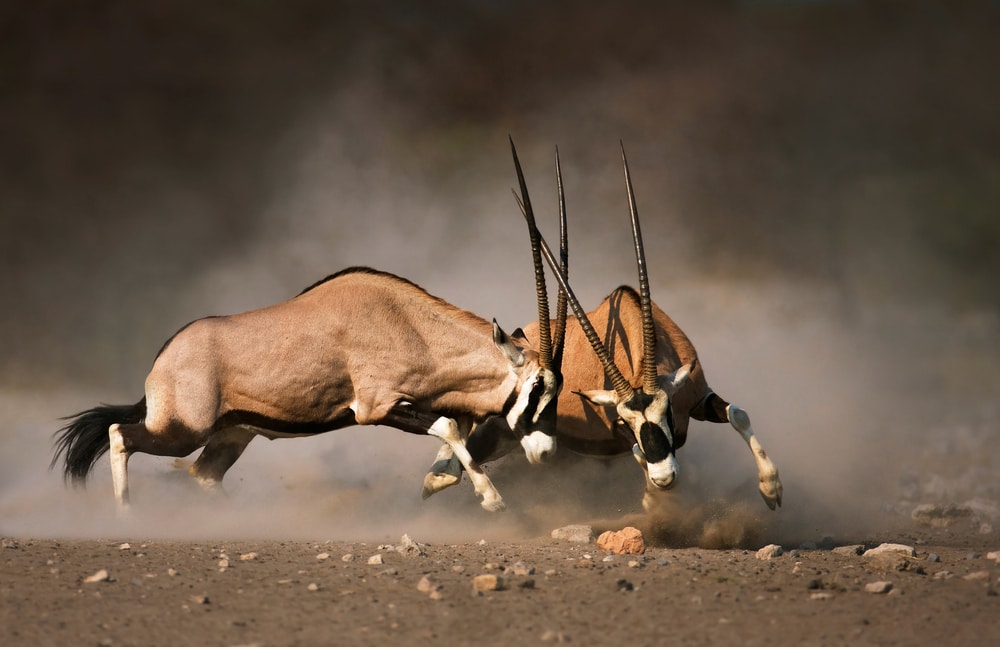
gemsbok oryx
1. Antelope Horns Are Made of The Substance as Nails and Hair
Thomson’s gazelle
If you have never given it some thought, this may come as a surprise. Did you know the antelope horn is made of the same substance, keratin, as the human nails and hair?
Furthermore, unlike the closely resembling animal the deer, the antelope’s horn continues growing throughout its entire life. Also, in most antelope species, only males produce horns that take on different shapes depending on the species.
2. Antelopes Unique Communication Styles
Like most animals, antelopes have their unique form of communication. For example, some species may grant, while others like dik-diks produce high-pitched sounds.
Antelopes also use scents for their communication, with some species producing scents from their hooves. This helps them to locate other herd members when they are accidentally separated. Scents can also be used to alert others of the presence of predators.
3. Courtship and Mating in Antelopes
waterbuck
Depending on the types of antelopes, courting takes many forms. For instance, in topi, females may snort to raise false alarms to attract males.
Depending on the antelope species, a gestation period of approximately 4-9 months follows mating. Females give birth to single carves, rarely twins.
4. Do You Know Some Antelopes Eat Meat?
gerenuk feeding on leaves
Antelopes are herbivores and in most cases, they are either grazers or browsers, with their main diet consisting of soft leaves, shoots, seeds, and fruits. But do you know some species of the antelopes have carnivorous behavior?
Duikers have sometimes been known to enjoy a delicacy of small birds, insects, and even some mammals.
5. Some Antelopes Species Might Disappear From Forever.
.kb-gallery-id-_458f69-44 .kadence-blocks-gallery-item .kb-gal-image-radius, .kb-gallery-id-_458f69-44 .kb-slide-item .kb-gal-image-radius img{border-radius:0px 0px 0px 0px;;}.kb-gallery-caption-style-cover-hover.kb-gallery-id-_458f69-44 .kadence-blocks-gallery-item .kadence-blocks-gallery-item-inner .kadence-blocks-gallery-item__caption, .kb-gallery-caption-style-below.kb-gallery-id-_458f69-44 .kadence-blocks-gallery-item .kadence-blocks-gallery-item-inner .kadence-blocks-gallery-item__caption{background:rgba(78, 33, 4, 0.75);}.kb-gallery-wrap-id-_458f69-44.wp-block-kadence-advancedgallery{overflow:visible;}.kb-gallery-wrap-id-_458f69-44.wp-block-kadence-advancedgallery .kt-blocks-carousel{overflow:visible;}
-
dama
-
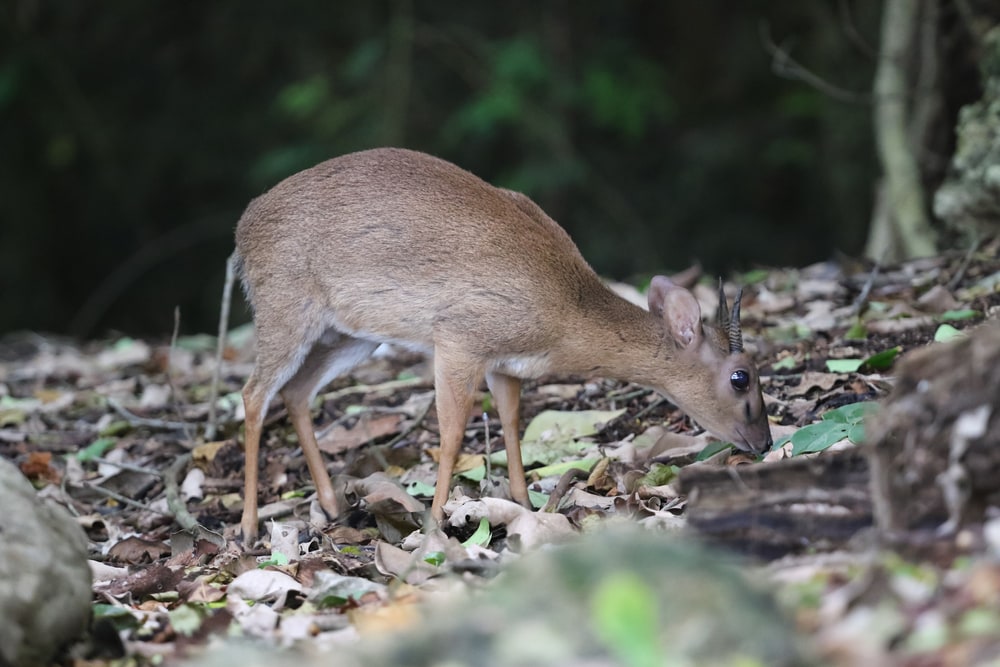
ader’s duiker
-
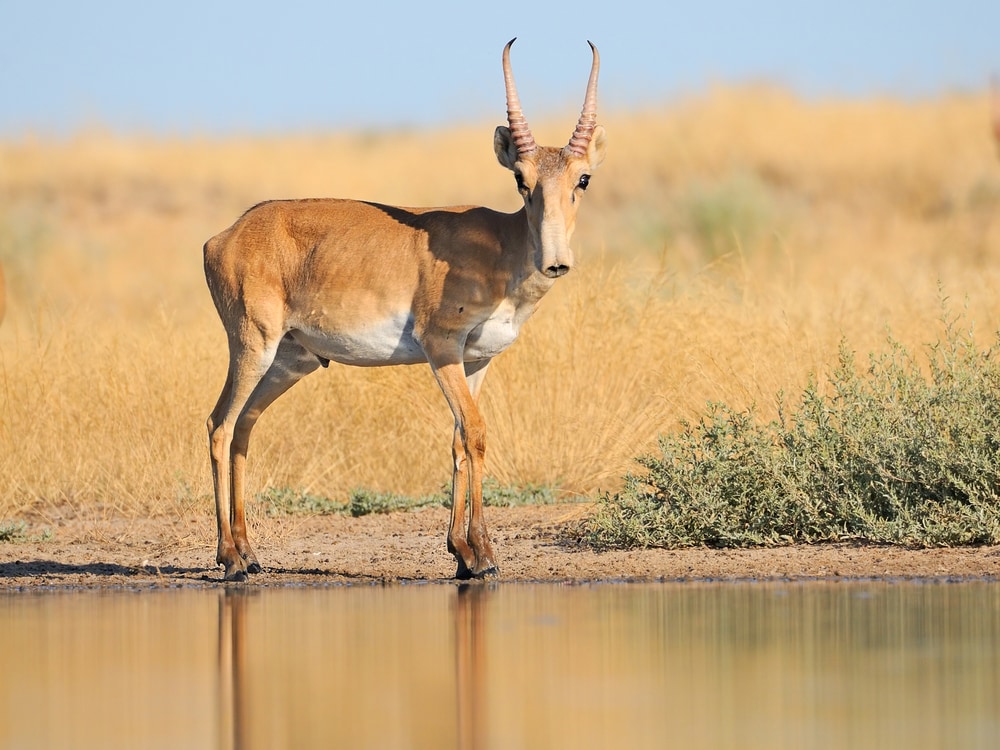
saiga antelope
-
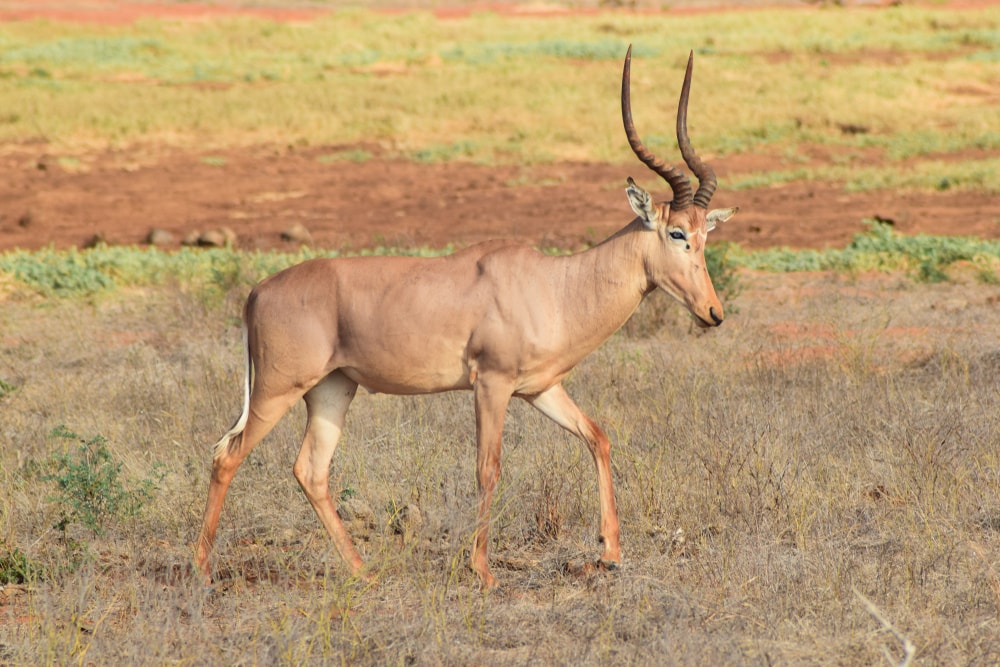
hirola antelope
-
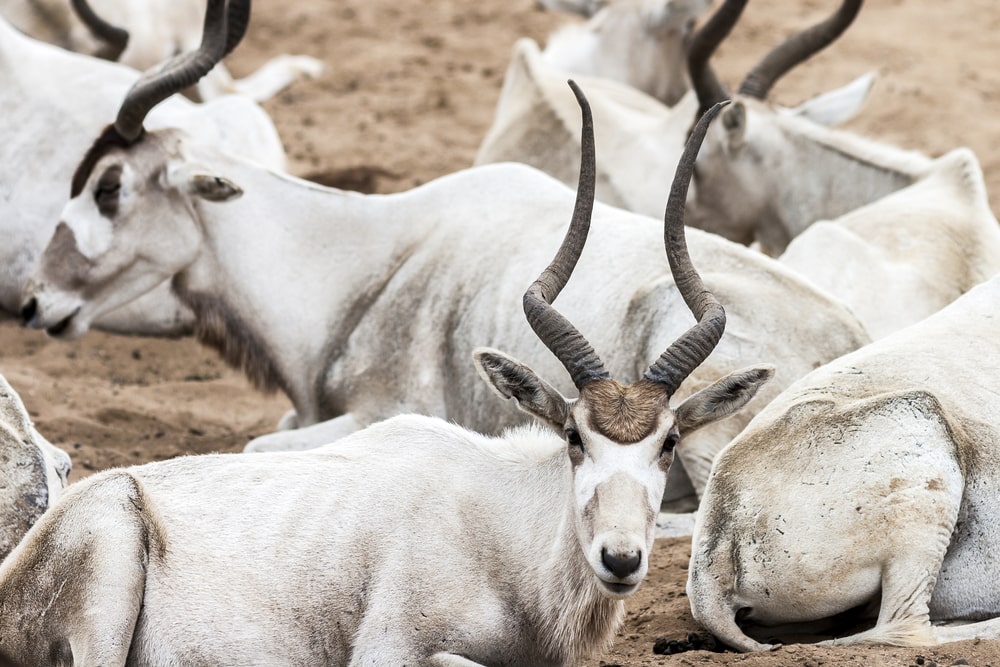
addax
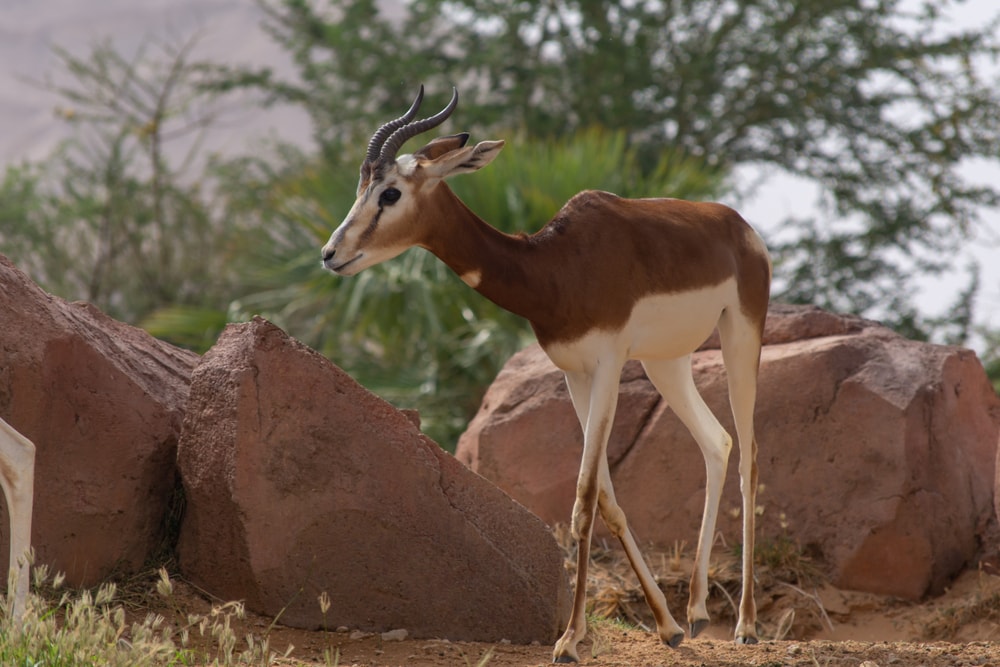
Sadly, some antelopes are in danger of extinction. According to the IUCN, up to a quarter of antelope species are threatened with extinction.
The dama gazelle, Ader’s Duiker, the saiga, hirola, and the Addax are some of the antelopes in danger of disappearing forever. While many antelopes may not be in immediate threat, a concerted effort is needed to shore up their dwindling numbers.
You may also like:
.wp-block-kadence-iconlist.kt-svg-icon-list-items_373ae6-e0:not(.this-stops-third-party-issues){margin-top:0px;margin-bottom:0px;}.wp-block-kadence-iconlist.kt-svg-icon-list-items_373ae6-e0 ul.kt-svg-icon-list:not(.this-prevents-issues):not(.this-stops-third-party-issues):not(.tijsloc){margin-top:0px;margin-right:0px;margin-bottom:var(—global-kb-spacing-sm, 1.5rem);margin-left:0px;}.wp-block-kadence-iconlist.kt-svg-icon-list-items_373ae6-e0 ul.kt-svg-icon-list{grid-row-gap:5px;}.wp-block-kadence-iconlist.kt-svg-icon-list-items_373ae6-e0 ul.kt-svg-icon-list .kt-svg-icon-list-item-wrap .kt-svg-icon-list-single{margin-right:10px;}.kt-svg-icon-list-items_373ae6-e0 ul.kt-svg-icon-list .kt-svg-icon-list-level-0 .kt-svg-icon-list-single svg{font-size:20px;}.kt-svg-icon-list-items_373ae6-e0 ul.kt-svg-icon-list .kt-svg-icon-list-level-1 .kt-svg-icon-list-single svg{font-size:20px;}